The Long Road Home
The University of California says it has now returned more than half of the 17,000 Native ancestors it once held. State auditors say its Berkeley campus could need until 2089 to finish. And a 2024 federal rule has left tribes without federal recognition, including the Bay Area’s Ohlone, standing outside the door.
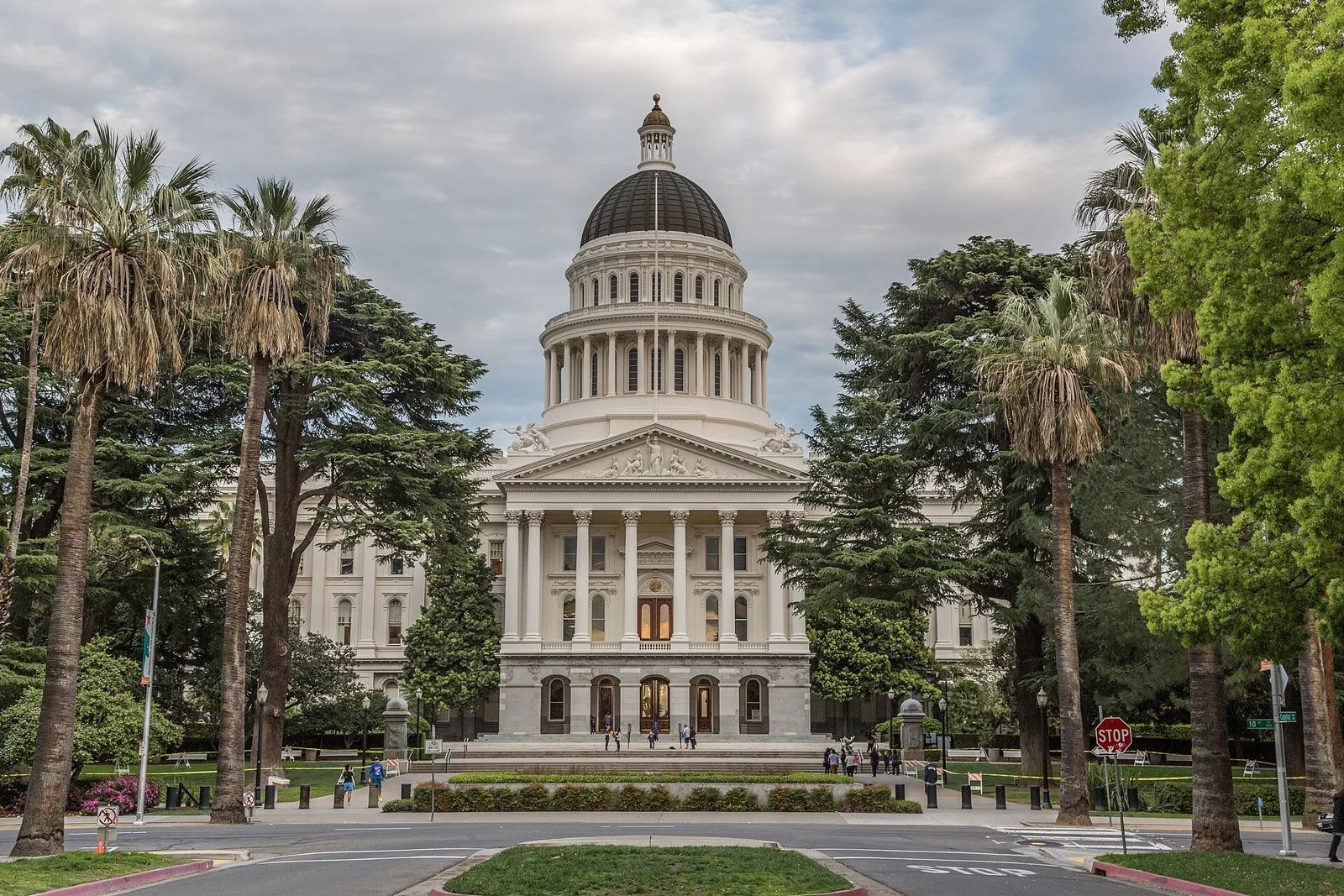
The California State Capitol in Sacramento. On Aug. 4, 2026, two legislative committees held an oversight hearing there on UC’s slow pace of repatriation. Photo: Tony Webster / Wikimedia Commons, CC BY-SA 2.0
Thirty-six years after Congress passed the Native American Graves Protection and Repatriation Act, the question in Sacramento is no longer whether California’s public universities must return the ancestors in their collections. It is how long they will be allowed to take.
That question filled the State Capitol on Aug. 4, when the Assembly Select Committee on Native American Affairs and the Joint Legislative Audit Committee held an oversight hearing on the University of California’s progress. It will be asked again this month. The California State Auditor is scheduled to begin its next audit of UC’s repatriation work in October, according to The Sacramento Bee.
For Bay Area tribes, and for the agencies and builders who work on their land, the answers are practical. Many of these ancestors were taken from places like the ones being graded and trenched today.
The audit
In April 2025, State Auditor Grant Parks reported that UC “lacks the accountability and urgency needed to promptly return Native American remains and cultural items.” It was the office’s third audit of the university’s compliance with NAGPRA and its 2001 state counterpart, CalNAGPRA.
The auditors reviewed four campuses: Berkeley, Riverside, San Diego and Santa Barbara. At the pace each campus kept from November 2022 through December 2024, they projected that full repatriation would take San Diego until 2037, Riverside until 2041 and Santa Barbara until 2053. Berkeley’s collection is so large that the auditors modeled it differently. Even at five times its current rate, they found, Berkeley would return 75 percent of its sites only by 2089. To reach that mark by 2030, it would need to work 50 times faster.
The report also found campuses still discovering collections they did not know they had, and three campuses carrying significant unspent repatriation money into later years, including money meant to support tribes.
The auditor made 18 systemwide recommendations. A year later, only six had been fully implemented, The Bee reported. The auditor’s own list of recommendations not fully implemented after one year includes 12 from the UC report.
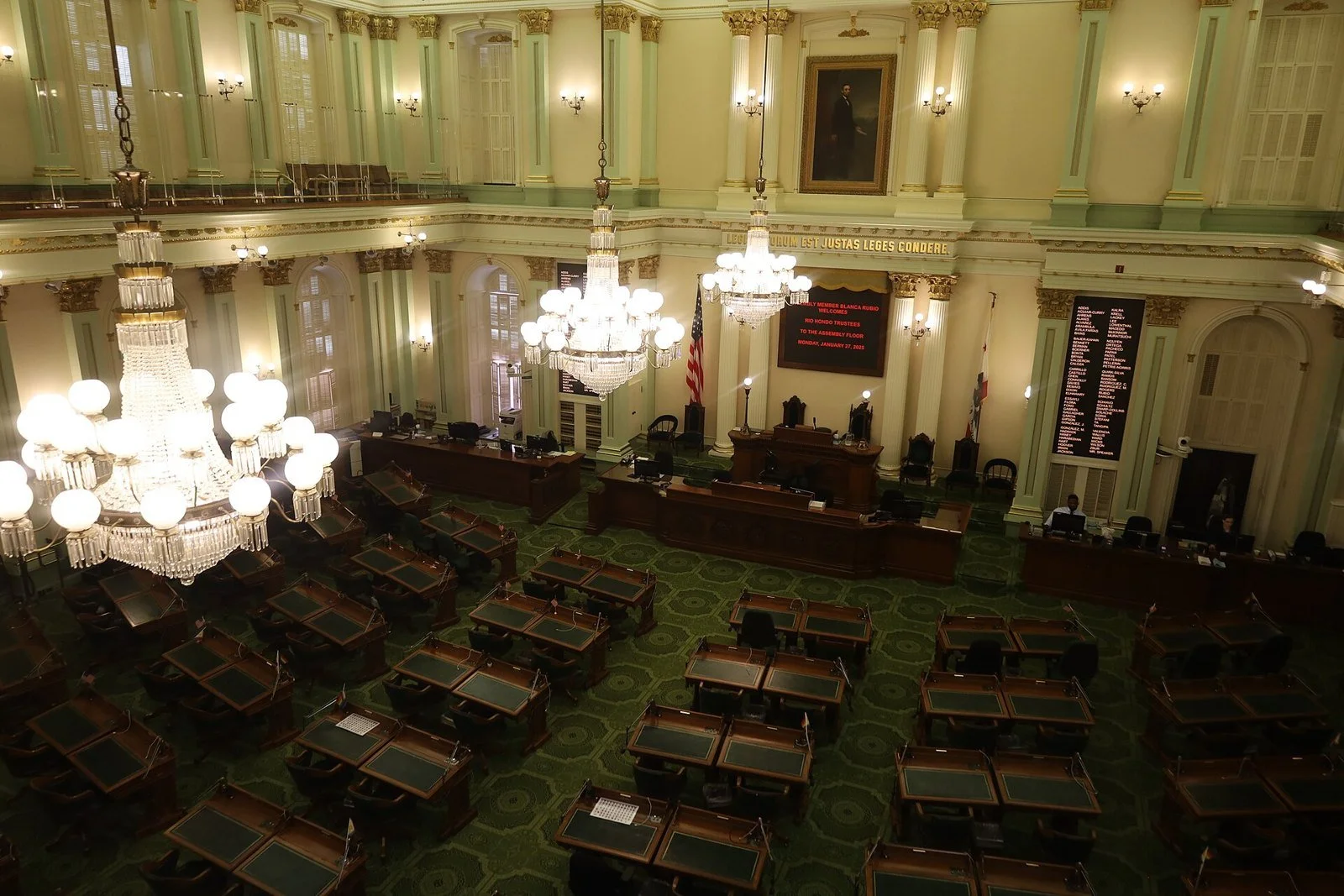
The Assembly Chamber of the California State Capitol. Lawmakers have warned they could use the budget to push UC toward faster compliance. Photo: Antony-22 / Wikimedia Commons, CC BY-SA 4.0
The hearing
UC came to the Aug. 4 hearing with better numbers than it once had. Vice President Theresa Maldonado said the university had recorded 57 repatriations between 1990 and 2018 and 191 between 2018 and 2026, according to The Bee. As of June, she said, UC had repatriated more than 9,000 of the 17,000 ancestors it held, KPBS reported. She also apologized. “We stand accountable for the deep and ongoing harm that our arrogance, quite frankly, has caused tribal communities,” she told the committees.
Lawmakers were not consoled. “Human remains are not archaeological or academic trophies. They don’t deserve to be held in boxes on shelves,” said Assemblymember James C. Ramos, the first California Native American elected to the Legislature. “Lack of funding, insufficient staffing or changes in personnel cannot continue to be an excuse for the state of California and the UC system.”
Assemblymember Chris Rogers, thinking of his 2-year-old son, said that under some of the timelines, “he’ll be applying to hopefully go to your institutions by the time you meet that. As a UC alum, that’s so embarrassing.” Assemblymember Patrick Ahrens said lawmakers could use the budget to force compliance, The Bee reported.
Mary Ann Andreas, a tribal council member of the Morongo Band of Mission Indians, put the tribes’ view plainly. “Progress that requires a tribe to fight this hard for this long is not a functioning system,” she said.
“Human remains are not archaeological or academic trophies. They don’t deserve to be held in boxes on shelves.” —Assemblymember James C. Ramos, Aug. 4, 2026
The gap
For the Bay Area, the most consequential part of the audit was a few paragraphs near the end.
Federal NAGPRA deals almost entirely with federally recognized tribes. CalNAGPRA was written to give California’s other tribes a path, too. Before January 2024, federal rules let a museum transfer remains it could not affiliate with a federally recognized tribe directly to a tribe without that recognition. The Interior Department’s revised NAGPRA regulations, effective in January 2024, removed that option. The auditor wrote that the change is “severely hampering campuses’ ability to fulfill the intent of CalNAGPRA,” and that it “identified no clear path” for the state to fix the problem on its own. Roughly 60 California tribes cannot receive repatriated remains through NAGPRA, the report said.
The Muwekma Ohlone Tribe of the San Francisco Bay Area is one of them. Its chairwoman, Charlene Nijmeh, joined Ramos and other tribal leaders in Sacramento on Aug. 4. In her testimony, as recorded in the hearing record, she argued that the 2024 rule had cut the lifeline CalNAGPRA was meant to provide. She said the only route left for her tribe is to ask a federally recognized tribe to include it in a joint claim. And she urged lawmakers to press California’s U.S. senators for a California-specific amendment to federal NAGPRA that would restore a direct path.
The stakes are recorded in the Federal Register. In October 2023, UC Berkeley published a notice covering the remains of 4,440 people and 24,993 funerary objects removed from Alameda, Contra Costa, San Francisco, San Mateo, Santa Clara and Santa Cruz counties over more than a century, as late as 2001. The university found no cultural affiliation with any federally recognized tribe. The notice itself says the places they came from “are also the aboriginal lands of the Ohlone/Costanoan State recognized tribes.”
Monica Arellano, a former vice chairwoman of the Muwekma Ohlone Tribe, told Truthout in May that 9,000 to 12,000 Muwekma Ohlone ancestors are held across UC and Bay Area institutions. “I know with a large number of ancestors that are still there that need to go home,” she said.
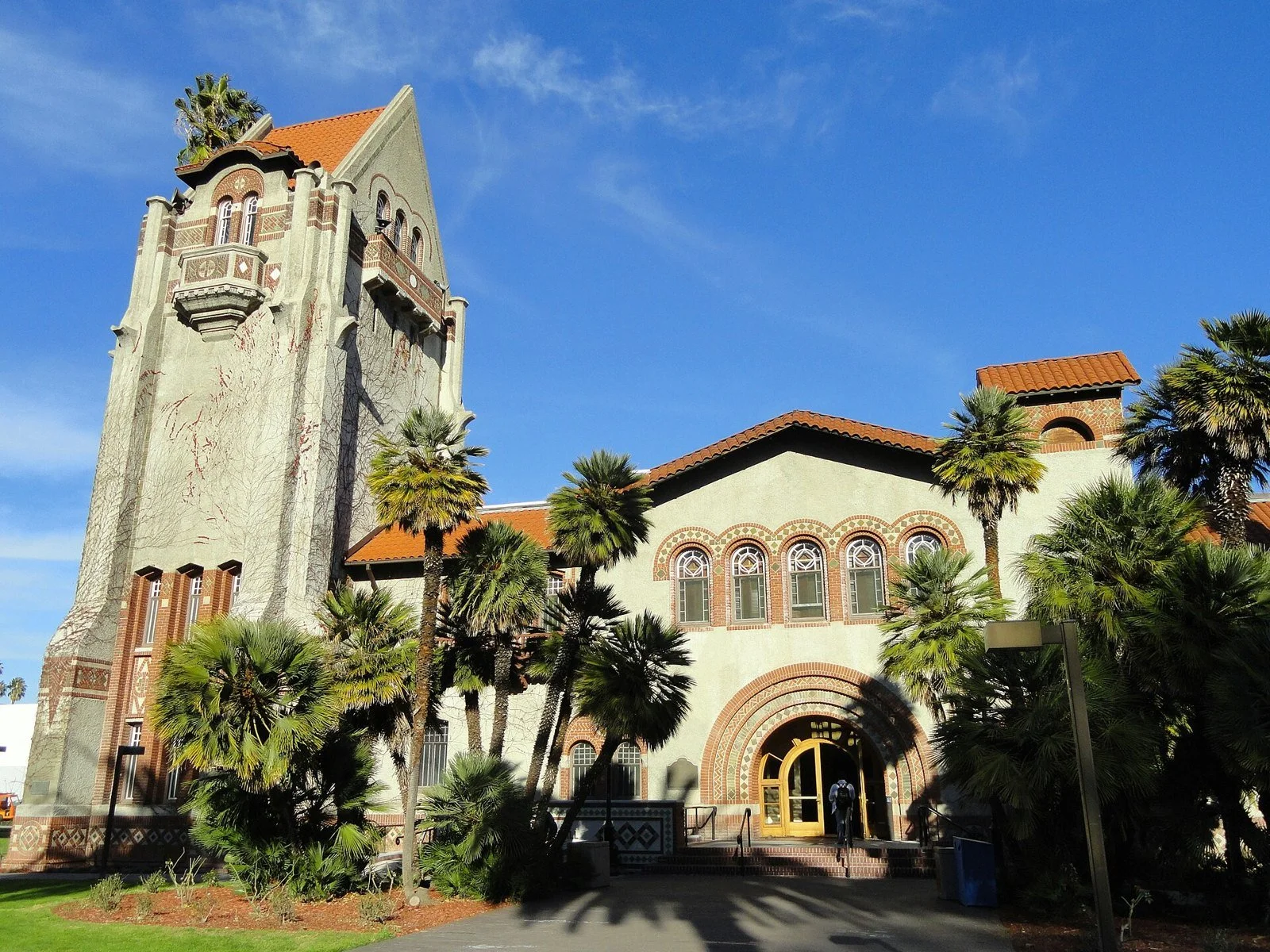
Tower Hall at San José State University. SJSU reported holding the remains of 514 people as of December 2025 and says those tied to tribes without federal recognition are the hardest to return. Photo: Daderot / Wikimedia Commons, CC0
Cal State’s turn
The California State University system is on a parallel track. In November 2025 it launched a systemwide NAGPRA policy that requires full-time repatriation coordinators and forbids using collections for teaching and research, and it allocated $3.7 million for the work in fiscal 2025-26, CalMatters reported in May. CSU holds the remains of more than 2,000 Native Americans.
The same federal gap shows up there, especially in the South Bay. San José State has returned all of the remains belonging to federally recognized tribes, its repatriation coordinator, Alisha Marie Ragland, told CalMatters. What remains are ancestors affiliated with tribes that lack federal recognition, and they pose the biggest challenge. As of December 2025, SJSU reported holding the remains of 514 people. “SJSU will continue to work with tribes to find appropriate and respectful means of sending the Ancestors home,” Ragland said. CSU plans to review its policy again in November 2026.
A separate law, AB 977 by Ramos, signed in September 2025, requires CSU to develop a policy, with tribes, for reburying repatriated remains on CSU land, at sites agreed to by CSU and the tribes affiliated with that land. For tribes without a land base, that matters.
Land, lists and enforcement
Other decisions now in motion will shape who gets a voice.
UC is drafting its first systemwide framework for tribal access, co-stewardship and land-use agreements, including reburial agreements, on roughly 80,000 acres of university land, Truthout reported in May. Its only visual example is a map of Berkeley’s land in Ohlone and Karkin territory, yet the East Bay’s Ohlone tribes do not appear to have been asked to help shape it, Truthout found. UC said the framework is not limited to federally or state-recognized tribes.
At the Native American Heritage Commission, the state agency at the center of both CalNAGPRA and the discovery process, two rulemakings are under way. The commission held a public hearing on April 17 on proposed CalNAGPRA enforcement regulations, which would add sections 31020 through 31027 to Title 14 of the California Code of Regulations, and it has since posted revised draft text. State law already empowers the commission to impose administrative civil penalties on agencies and museums it finds have violated CalNAGPRA; the proposed rules govern how that enforcement would work. In September it also posted draft regulations for its Sacred Lands File, the confidential inventory of sacred places that agencies and consultants ask the commission to search during environmental review. Morning Star Gali of the International Indian Treaty Council told Truthout that pending commission rules she has followed would remove tribes without federal recognition from the commission’s contact list.
That list matters well beyond museums. California’s environmental review law defines a “California Native American tribe” as one on the commission’s contact list, which is how tribes without federal recognition consult on projects under AB 52. Developers and agencies should watch closely.
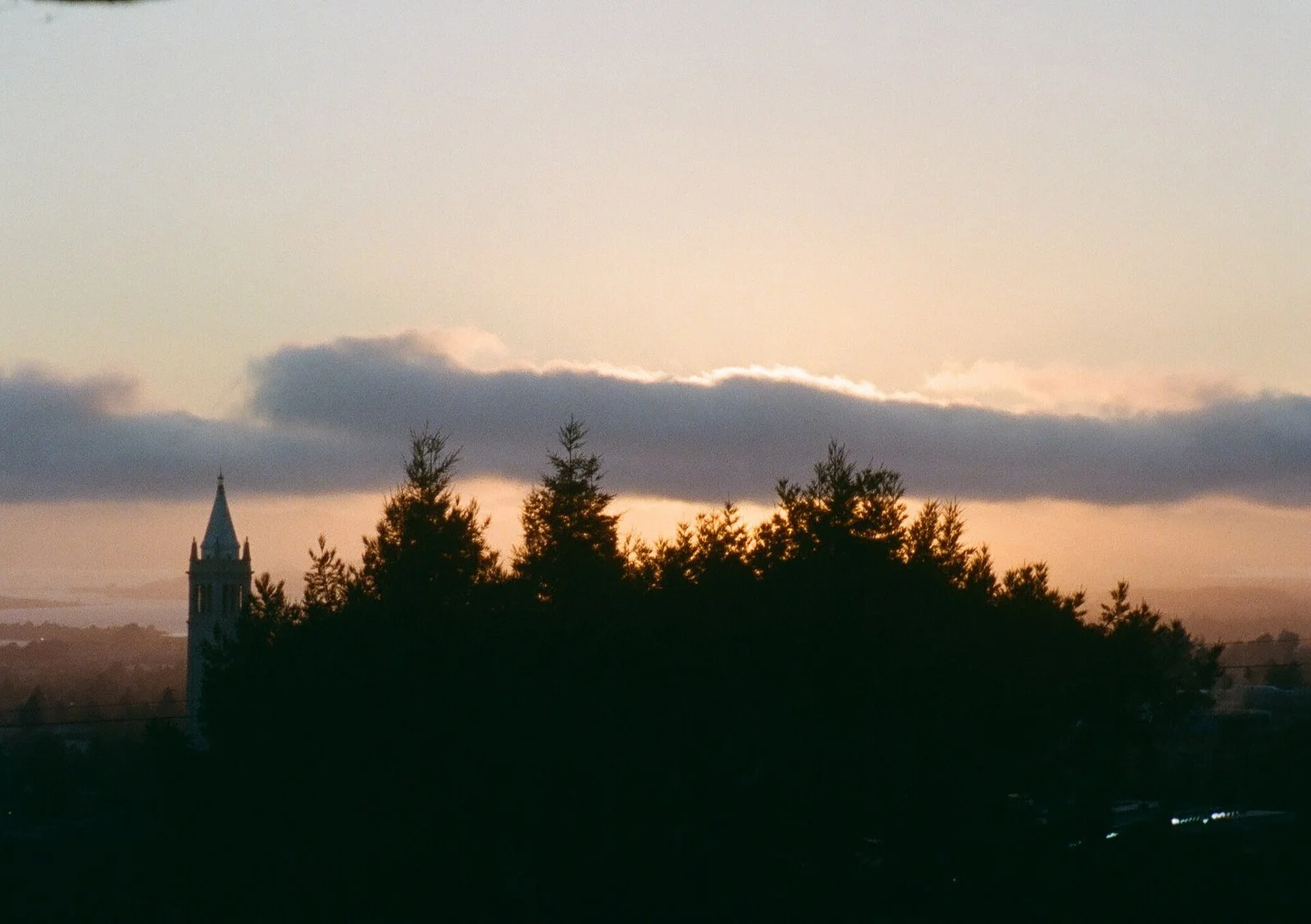
Sather Tower rises over the Berkeley campus at sunset. UC Berkeley holds the largest collection of Native American ancestors in the UC system. Photo: Wil540 art / Wikimedia Commons, CC BY-SA 4.0
What comes next
The next state audit of UC is scheduled to begin this month. UC has set itself a goal of submitting inventories for all ancestors and associated funerary objects under its control by December 2028; as of April 2026, it had published inventory completion notices for 81 percent of the ancestors it holds systemwide. CSU’s policy review comes in November.
None of those deadlines solves the problem the auditor flagged and Nijmeh brought to the Capitol. While the 2024 federal rule stands, thousands of Bay Area ancestors have no direct route home to the people who claim them.
Days after the hearing, the Muwekma Ohlone Tribe posted a short reflection on why its chairwoman went. “Repatriation is more than the return of ancestral remains,” the Tribe wrote. “It is about restoring dignity, honoring our ancestors, and bringing them home to rest on their homeland.”
Editor’s note: Ohlone Families Consulting Service is the cultural resources management service of the Muwekma Ohlone Tribe of the San Francisco Bay Area, whose chairwoman, Charlene Nijmeh, is mentioned in this article. Chairwoman Nijmeh’s testimony is paraphrased from the hearing record. Quotations come from published reporting by The Sacramento Bee, KPBS, CalMatters and Truthout, from the California State Auditor’s report 2024-047 and from the Federal Register; full sources are listed in the source notes.