Before the First Shovel, and After
In the Bay Area, almost any trench can cross ancestral ground. Here is a plain-language guide to what California law asks of developers and public agencies, from tribal consultation under AB 52 and SB 18 to the hours after a crew finds human remains.
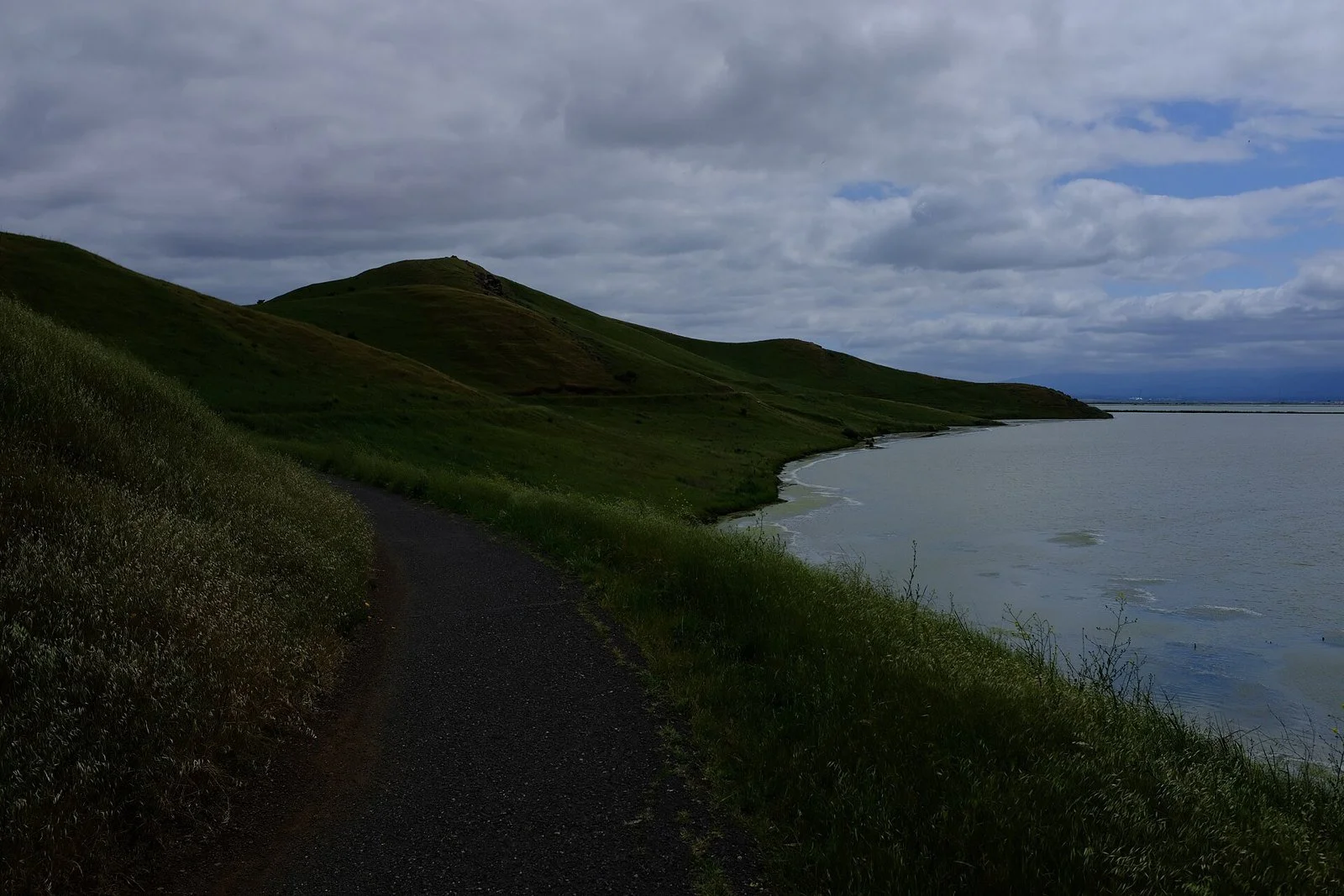
Spring at Coyote Hills Regional Park in Fremont, on the eastern shore of San Francisco Bay. Photo: Poshotenk / Wikimedia Commons, CC BY-SA 4.0
Last April, a crew building a new athletics facility at UC Berkeley found the remains of a Native person about 2 feet below old concrete. Work stopped in that area, and the state’s Native American Heritage Commission was brought in. (We tell that story elsewhere in this issue.)
The site was a former parking lot. That is the lesson for anyone who builds in the Bay Area. More than 425 shellmounds once surrounded San Francisco Bay, and they served as ceremonial and burial sites. Many stood near creek mouths and along the shore, in places that are now streets, campuses, rail lines and parking lots.
California law has two jobs here. One is to bring tribes into planning early, before ground is broken. The other is to govern exactly what happens if ancestors are found anyway. This guide covers both. It is a summary of the statutes, not legal advice; consult counsel and the agencies involved on any specific project.
Who counts as a tribe
Start with a definition that surprises some newcomers. Under the California Environmental Quality Act, a “California Native American tribe” is a Native American tribe located in California that is on the contact list maintained by the Native American Heritage Commission (Public Resources Code section 21073). Federal recognition is not required. That is why Bay Area Ohlone tribes, none of which currently has federal recognition, take part in environmental review of projects on their ancestral land.
AB 52: consultation under CEQA
AB 52, the 2014 law that added “tribal cultural resources” to CEQA, governs most project-level consultation. Tribal cultural resources include sites, features, places, cultural landscapes, sacred places and objects with cultural value to a California Native American tribe that are listed or eligible for listing on a historical register, or that the lead agency, supported by substantial evidence, determines to be significant (section 21074).
The sequence runs like this (section 21080.3.1):
A tribe asks the lead agency, in writing, to be notified of projects in the area with which it is traditionally and culturally affiliated.
Within 14 days of deciding that a project application is complete, or of deciding to undertake a project itself, the agency must send that tribe written notice, including a brief project description, its location and a statement that the tribe has 30 days to request consultation.
If the tribe responds in writing within 30 days, the agency must begin consultation within 30 days of the request, and before it releases a negative declaration, mitigated negative declaration or environmental impact report.
Consultation can cover the type of review, significance, alternatives and mitigation (section 21080.3.2). It ends when the parties agree on measures, or when a party, acting in good faith and after reasonable effort, concludes that agreement cannot be reached. Agreed measures go into the environmental document and the mitigation monitoring and reporting program, and they are “fully enforceable” (section 21082.3).
Two provisions deserve attention. First, an agency may certify an EIR or adopt a mitigated negative declaration for a project with a significant impact on an identified tribal cultural resource only if consultation has concluded, the tribe has failed to engage after requesting consultation, or the tribe did not request consultation within 30 days of proper notice (section 21082.3(d)). Skipping steps puts approvals at risk. Second, confidentiality binds the applicant too. Information a tribe shares about the location, description and use of its resources may not be disclosed without the tribe’s consent, and project applicants and their legal advisers must use a reasonable degree of care to keep it confidential “for the purposes of preventing looting, vandalism, or damage to tribal cultural resources.”
The statute’s own examples of mitigation include avoiding and preserving resources in place, including by planning parks or open space around them; treating the resource “with culturally appropriate dignity”; permanent conservation easements; and protecting the resource (section 21084.3).
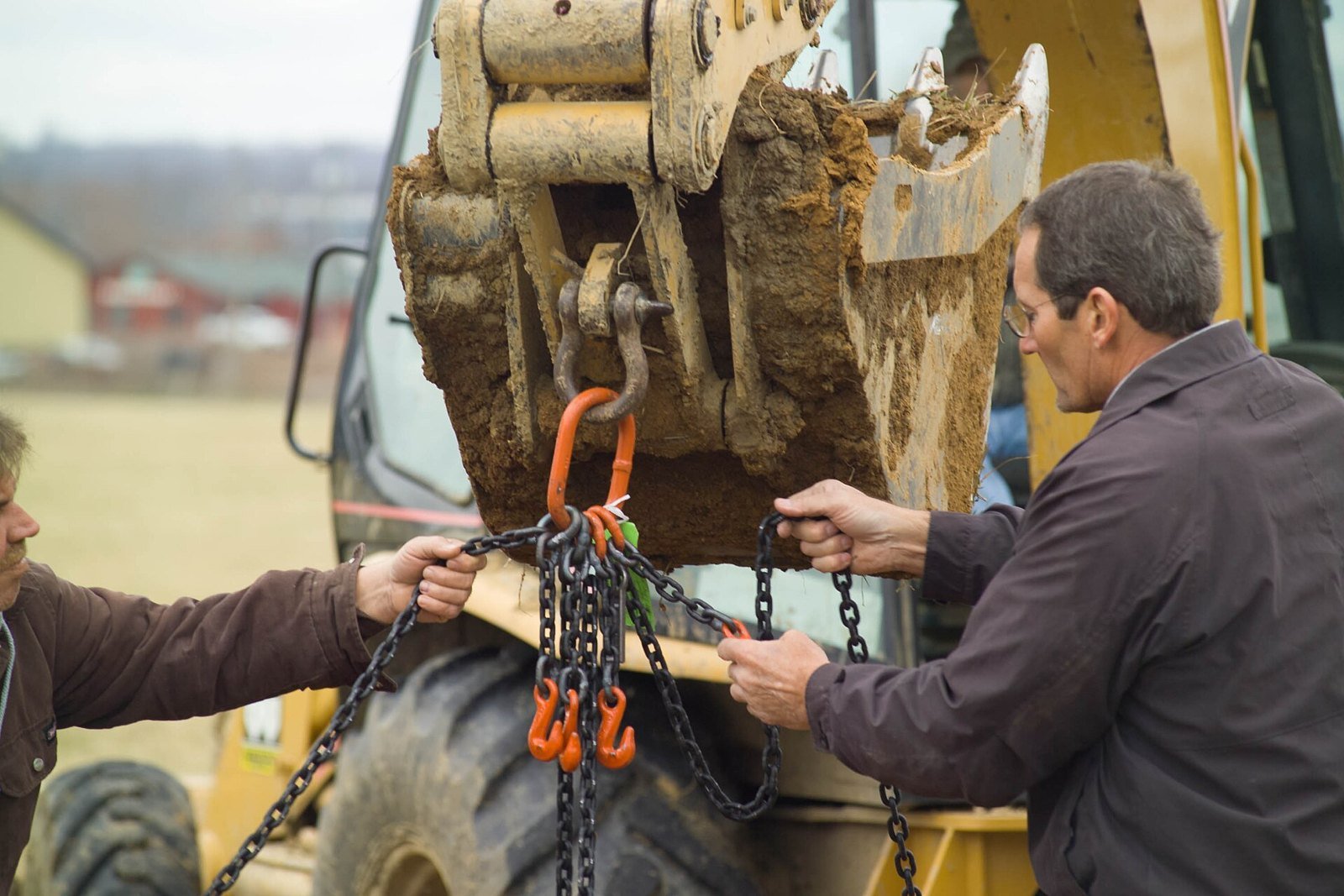
Workers rig a backhoe bucket during trench work. When remains turn up, state law stops excavation at the spot and in any nearby area that may hold more. Photo: NIOSH / Wikimedia Commons, public domain
SB 18: planning decisions
SB 18, the 2004 law, reaches earlier in the process. Before a city or county adopts or amends its general plan, it must consult with tribes on the commission’s contact list to preserve or mitigate impacts to cultural places (Government Code section 65352.3). A tribe has 90 days from the date it is contacted to request consultation, unless it agrees to a shorter period. State guidelines apply the same process to specific plans. The law defines consultation as “the meaningful and timely process of seeking, discussing, and considering carefully the views of others,” conducted in a way that is “mutually respectful of each party’s sovereignty” (section 65352.4). Local governments must keep information about those places confidential.
Where monitoring fits
No single statute requires a Native American monitor on every project. Monitoring usually arrives through the process above, as a measure agreed to in consultation or adopted as a condition of approval where ground disturbance could encounter tribal cultural resources.
In practice, a tribal monitor watches ground-disturbing work such as excavation for highways, utilities or flood control, identifies cultural material as it appears, and can halt work when burials or artifacts are encountered so they are handled sensitively by tribal members. For project teams, the practical advice is simple. Engage tribes early, before designs harden, when avoidance is still cheap. Budget for monitoring and for the chance of a discovery. And make sure every crew knows what to do if a bone, shell deposit or artifact turns up.
When remains are found
If human remains are discovered anywhere other than a dedicated cemetery, a separate set of rules takes over immediately. They apply whether or not a project went through CEQA.
1. Stop. There may be no further excavation or disturbance of the site or of any nearby area reasonably suspected to overlie adjacent remains (Health and Safety Code section 7050.5(b)).
2. Call the coroner. The person responsible for the excavation notifies the county coroner, who has two working days to determine whether the death is a matter for investigation.
3. The coroner calls the commission. If the coroner recognizes the remains as Native American, or has reason to believe they are, the coroner must contact the Native American Heritage Commission by telephone within 24 hours (section 7050.5(c)).
4. The commission names the descendants. The commission must immediately notify those it believes to be most likely descended from the deceased (Public Resources Code section 5097.98(a)). This is the Most Likely Descendant, or MLD.
5. The descendants inspect and recommend. With the landowner’s permission, the descendants may inspect the site. They must complete their inspection and make recommendations within 48 hours of being granted access.
6. Protect the area and confer. The landowner must keep the immediate vicinity from being damaged or disturbed by further development until it has conferred with the descendants, “taking into account the possibility of multiple human remains” (section 5097.98(b)). The descendants’ preferences may include nondestructive removal and analysis, preservation in place, relinquishment to the descendants, or other culturally appropriate treatment. Items buried with the remains are treated the same way.
7. If there is no agreement. If the commission cannot identify a descendant, the descendants make no recommendation, or the landowner rejects the recommendation and mediation through the commission fails, the landowner must rebury the remains and associated items “with appropriate dignity” on the property, in a location not subject to further subsurface disturbance (section 5097.98(e)). The landowner must then protect the site by recording it with the commission or the regional Information Center, using an open-space or conservation zoning designation or easement, or recording a “Notice of Reinterment of Native American Remains” with the county.
Actions taken to carry out section 5097.98 are exempt from CEQA and the Coastal Act, so a discovery does not by itself reopen environmental review of the treatment decision.
The descendants “shall complete their inspection and make recommendations or preferences for treatment within 48 hours of being granted access to the site.” —California Public Resources Code section 5097.98(a)
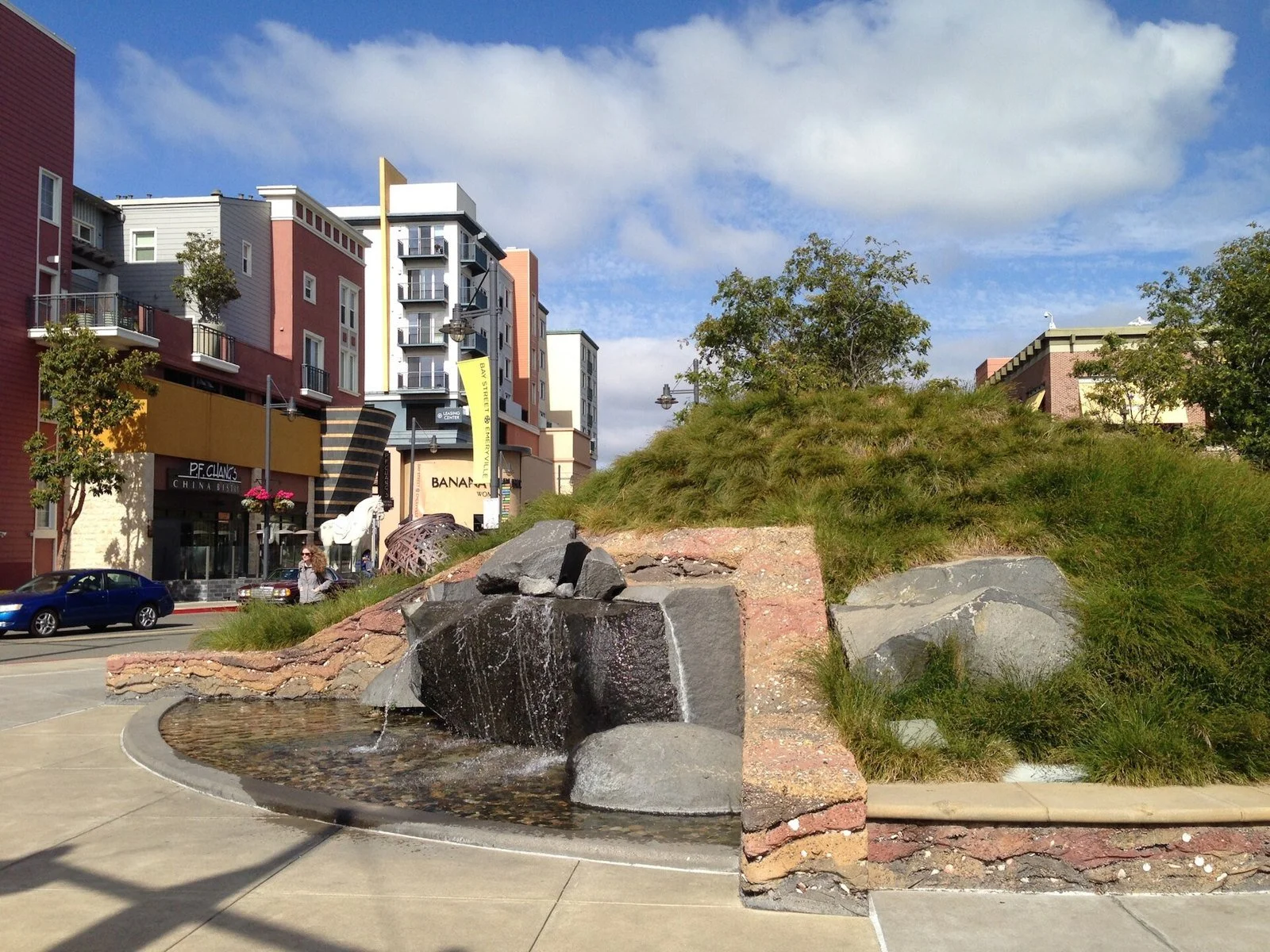
A memorial in Emeryville marks the site of the Emeryville Shellmound, now California Historical Landmark No. 335. It was once the largest of the bay’s shellmounds. Photo: Smerdis / Wikimedia Commons, CC BY-SA 4.0
The penalties
The law is serious about the rest. Knowingly mutilating, disinterring, wantonly disturbing or willfully removing human remains outside a dedicated cemetery without authority of law is a misdemeanor (Health and Safety Code section 7050.5(a)). Knowingly or willfully obtaining or possessing Native American artifacts or human remains taken from a grave or cairn after Jan. 1, 1988, except as the law allows, is a felony, as is removing them without authority of law with intent to sell or dissect, or with malice or wantonness (Public Resources Code section 5097.99).
Different rules apply on federal and tribal land, where NAGPRA’s own provisions on discoveries govern. Projects with federal funding or permits may also go through federal historic preservation review.
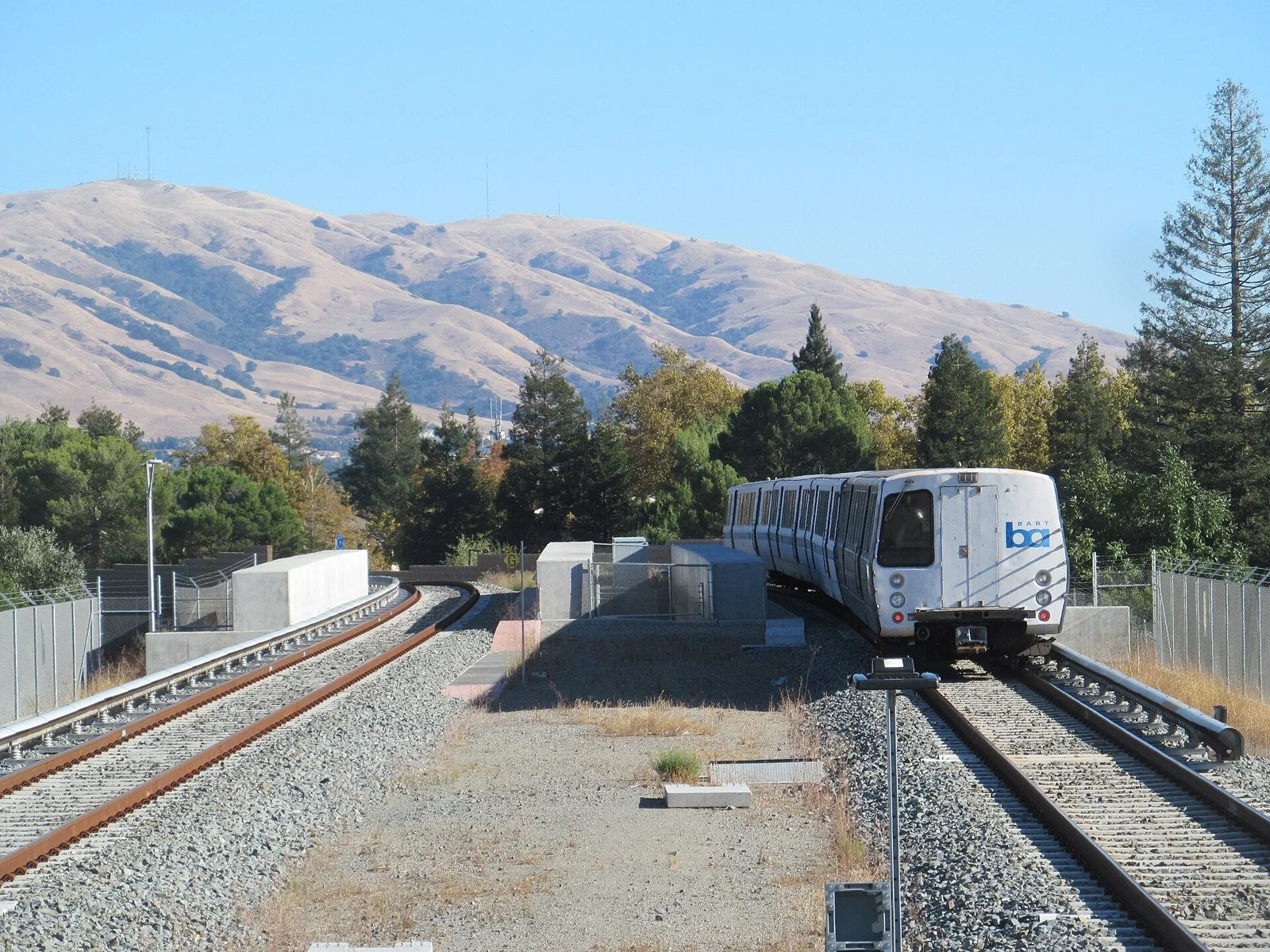
A BART train leaves Fremont station beneath Mission Peak in 2017. Transit, housing and utility projects all cross ancestral Ohlone land. Photo: Pi.1415926535 / Wikimedia Commons, CC BY-SA 3.0
A checklist for project teams
Ask the lead agency early which tribes have requested AB 52 notice for your project area.
Build the timelines into your schedule: 14 days for notice, 30 days for a tribe to respond, 30 days to begin consultation, 90 days for general plan consultation requests.
Keep tribal information and site locations out of public documents and marketing.
If monitoring is a measure, budget and schedule it with the ground-disturbing work.
Train crews on the stop-work rule, and keep the county coroner’s number at the site.
If remains are found, stop, secure the area and call the coroner. Then make room for the conversation the law requires.
The statutes give the framework. What makes it work is respect: for the people who are buried here, and for their descendants, who are still here too.
Ohlone Families Consulting Service is the cultural resources management service of the Muwekma Ohlone Tribe of the San Francisco Bay Area, which provides tribal monitoring and consultation on projects in the Tribe’s ancestral territory. This article summarizes California statutes as published in October 2026 and is not legal advice. Statutory text is quoted from the California Health and Safety Code, Public Resources Code and Government Code; full sources are listed in the source notes.