When the Review Door Closes
In June 2025, California carved large new holes in its environmental review law to speed housing and infrastructure. For qualifying urban infill homes, a compressed tribal consultation track survived. For other exemptions, the consultation that usually follows an environmental review often does not. A year later, Bay Area burial places sit inside that redesign.
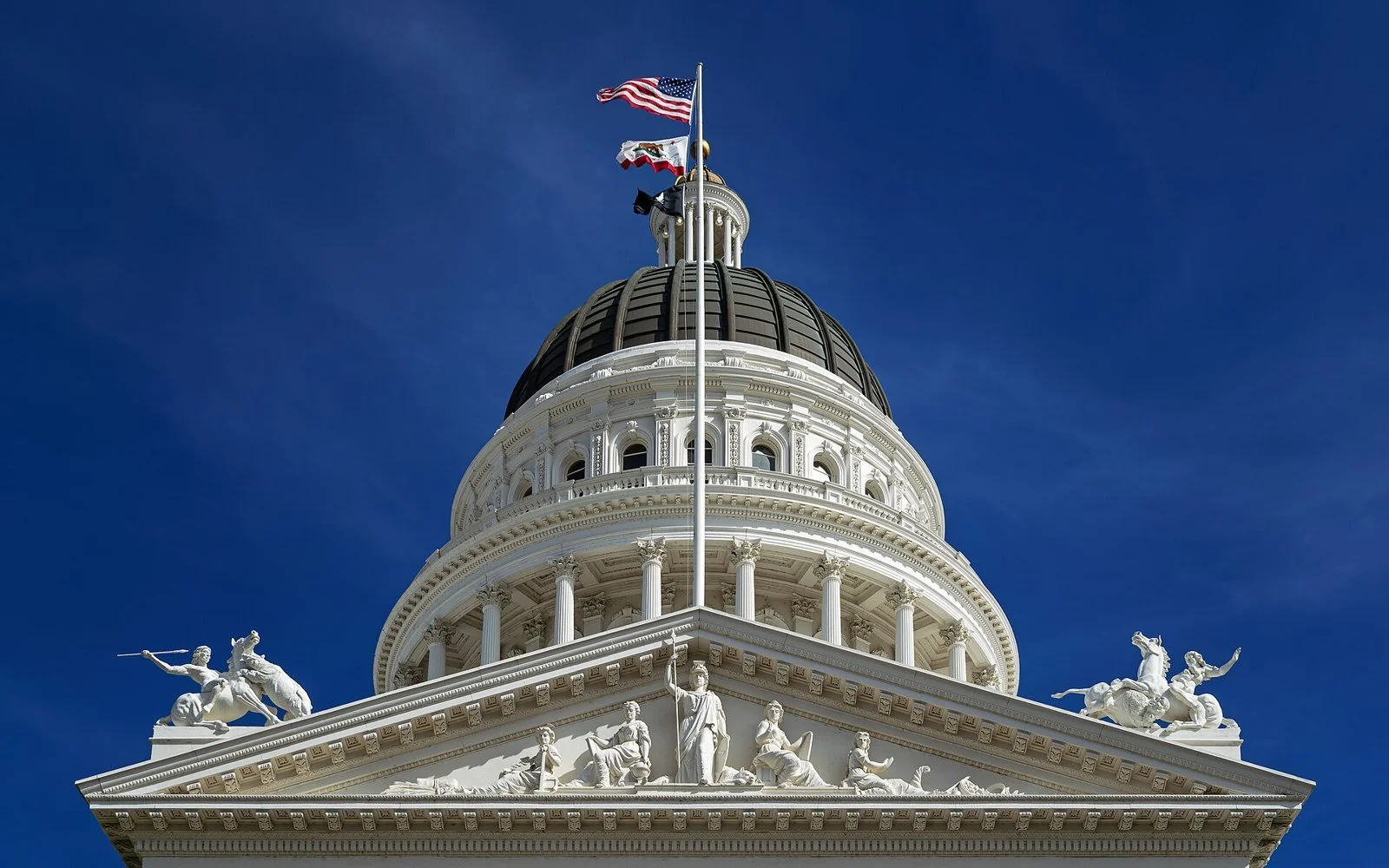
The California State Capitol dome in Sacramento. Governor Newsom signed AB 130 and SB 131 here on June 30, 2025. Photo: Radomianin / Wikimedia Commons, public domain
On June 30, 2025, Governor Gavin Newsom signed two budget trailer bills that remade how California decides whether a project needs an environmental review. Assembly Bill 130 and Senate Bill 131 took effect the next day. The governor’s office called them “the most consequential housing and infrastructure reform in recent state history.” Housing advocates celebrated. A coalition of more than 100 environmental, justice and community organizations had begged him, three days earlier, to reject SB 131 as “the worst anti-environmental bill in California in recent memory” and “a betrayal of environmental justice communities, Tribes, and the environment.”
For tribes, and for the monitors and consultants who work when ground is opened on ancestral land, the fight was never abstract. California’s California Environmental Quality Act, or CEQA, is the main door through which tribal cultural resources — including burial areas — enter a project’s paper trail. Assembly Bill 52, signed in 2014, built a consultation process onto that door. When a lead agency prepares a CEQA document, it must offer consultation to California Native American tribes traditionally and culturally affiliated with the project area. Close the door, and that process does not automatically follow.
That is the trade the 2025 trailer bills made. They did not repeal AB 52. They narrowed the set of projects that ever open the door.
What AB 130 actually does
AB 130’s centerpiece for tribes is Public Resources Code section 21080.66, a full statutory exemption from CEQA for qualifying urban infill housing. The Association of Bay Area Governments, in a June 2026 staff guide updated after a later trailer bill cleaned up the text, calls it one of the most significant CEQA changes in recent history.
To qualify, a project must be a “housing development project” under state housing law, generally on a site of no more than 20 acres, inside a city or a Census-defined urban area, meeting urban-infill tests, consistent with the general plan and zoning, meeting a minimum density floor, and avoiding the demolition of a structure already listed on a national, state or local historic register. Farmworker and supportive housing can qualify. Hotels generally cannot.
Because the project is exempt from CEQA, ordinary AB 52 consultation does not apply. The Legislature wrote a replacement. Within 14 days of an application being deemed complete — or, for older applications completed before July 1, 2026, within 14 days of the agency learning the project is claiming the exemption — the local government must notify each traditionally and culturally affiliated California Native American tribe by certified mail and email. The notice must include maps, scope and any known cultural studies. Each tribe has 60 days to accept. The agency must start consultation within 14 days of acceptance. Consultation must finish in 45 days, with one 15-day extension if a tribe asks.
The statute then does something AB 52 never did as clearly. It lists binding conditions of approval that apply unless the tribe and the applicant mutually agree to drop them. On a tribe’s request, the project must include tribal monitoring during all ground-disturbing work, with the tribe designating the monitor and the applicant paying a reasonable rate. Tribal cultural resources must be avoided where feasible. Treatment and documentation must be culturally appropriate. The applicant must run a California Historical Resources Information System records search and a tribal cultural records search, and must submit a Sacred Lands Inventory request to the Native American Heritage Commission. If human remains or burial grounds are found, work must stop under Health and Safety Code section 7050.5 and Public Resources Code section 5097.98, and treatment must proceed in consultation with the affected tribe.
The statute’s own definition of a tribal cultural resource for this exemption expressly includes “a Native American sanctified cemetery, Indian cemetery, or Indian burial area.” That language matters in a region where shellmounds, village sites and burial places sit under parking lots, fill and postwar subdivisions.
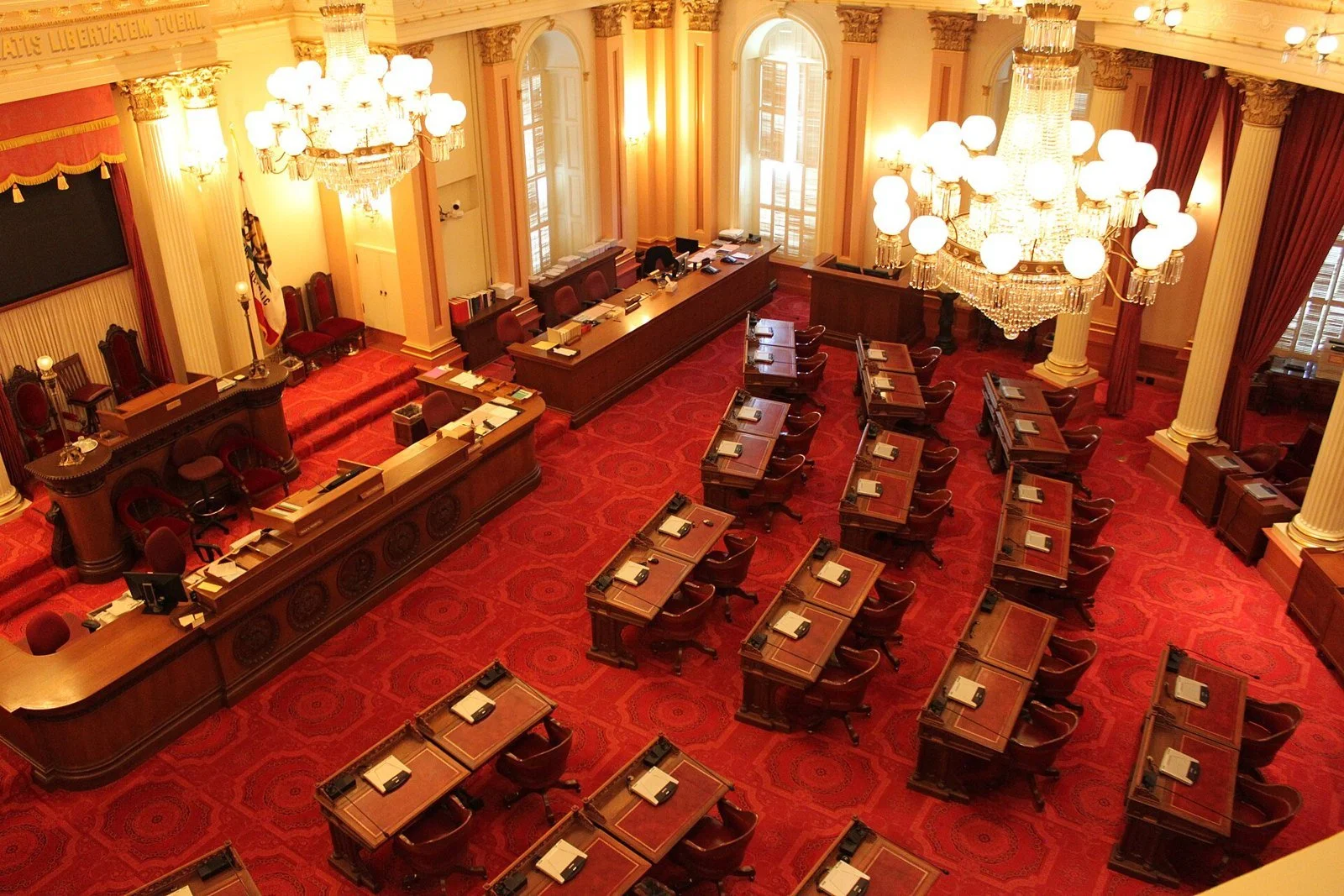
The California Senate Chamber. SB 131 cleared the Legislature as a budget trailer bill after limited public hearing. Photo: BenFranske / Wikimedia Commons, CC BY-SA 3.0
What SB 131 left out
SB 131 is the broader bill. It added or expanded exemptions for day care centers, rural health clinics and federally qualified health centers under 50,000 square feet, nonprofit food banks on industrial land, advanced manufacturing on industrial land, certain farmworker housing, wildfire risk-reduction projects, expanded broadband deployment in local street rights-of-way, some high-speed rail facilities, and the rezoning that implements an approved housing element. It also created a “near miss” rule that narrows CEQA review when a housing project misses an exemption by a single condition, and it limited which internal agency emails must enter the administrative record in a lawsuit.
Those exemptions do not carry the section 21080.66 tribal consultation package. When a project is fully exempt from CEQA and no parallel statute requires notice, the AB 52 invitation never goes out. Opponents of SB 131 said so at the time. Writing after the Senate Budget Committee advanced the trailer, the California Condor Chapter of the Sierra Club noted that the new exemptions “preclude consultation with tribes that is otherwise required in all cases where tribal sites or artifacts are affected or present.” The June 27 coalition letter to the governor and legislative leaders framed the closed-door drafting itself as evidence that the public — and tribes — were being cut out.
Housing and local-government groups argue the opposite: that California cannot house its workers or cut vehicle miles if every project faces years of review, and that AB 130’s mandatory conditions show the Legislature tried to keep burial protections while speeding homes. Both claims can be true at once. The text still does what it does. For an advanced manufacturing plant on industrial land, a broadband trench in a local street, or a housing-element rezoning that unlocks many parcels, the CEQA-triggered tribal consultation used since 2015 may never start.
A compressed clock
Even where AB 130’s consultation track applies, the clock is short.
Under AB 52, a tribe generally has 30 days to request consultation after receiving notice of a project that will prepare a CEQA document, and consultation can continue through the environmental review. Under section 21080.66, the whole consultation must end in roughly two months of active talks, then the agency has as little as 30 days after consultation ends to approve or deny the project under Permit Streamlining Act deadlines that AB 130 also tightened. Miss the agency’s decision deadline and the application can be deemed approved.
Bay Area planners have spent a year rewriting intake forms, tribal-notice templates and standard conditions of approval. ABAG’s June 2026 guide tells cities to prepare those templates; San Francisco Planning posts a supplemental AB 130 application that walks through the tribal steps. The paperwork exists. What remains unsettled is how often a 45-day consultation can find an unmapped burial area, how often a tribe without a large cultural staff can answer certified mail in 60 days, and what happens when no enforceable agreement is reached before the shot clock runs out.
Law firms advising developers have been frank about the remaining risk. Farella Braun + Martel, in a mid-2025 client alert, noted that consultation under AB 130 can still force footprint changes, and that if the tribe and applicant cannot agree, the tribe “will have an incentive to explore litigation options.” The exemption removes CEQA. It does not remove every other claim, and it does not erase Health and Safety Code duties when bones appear.
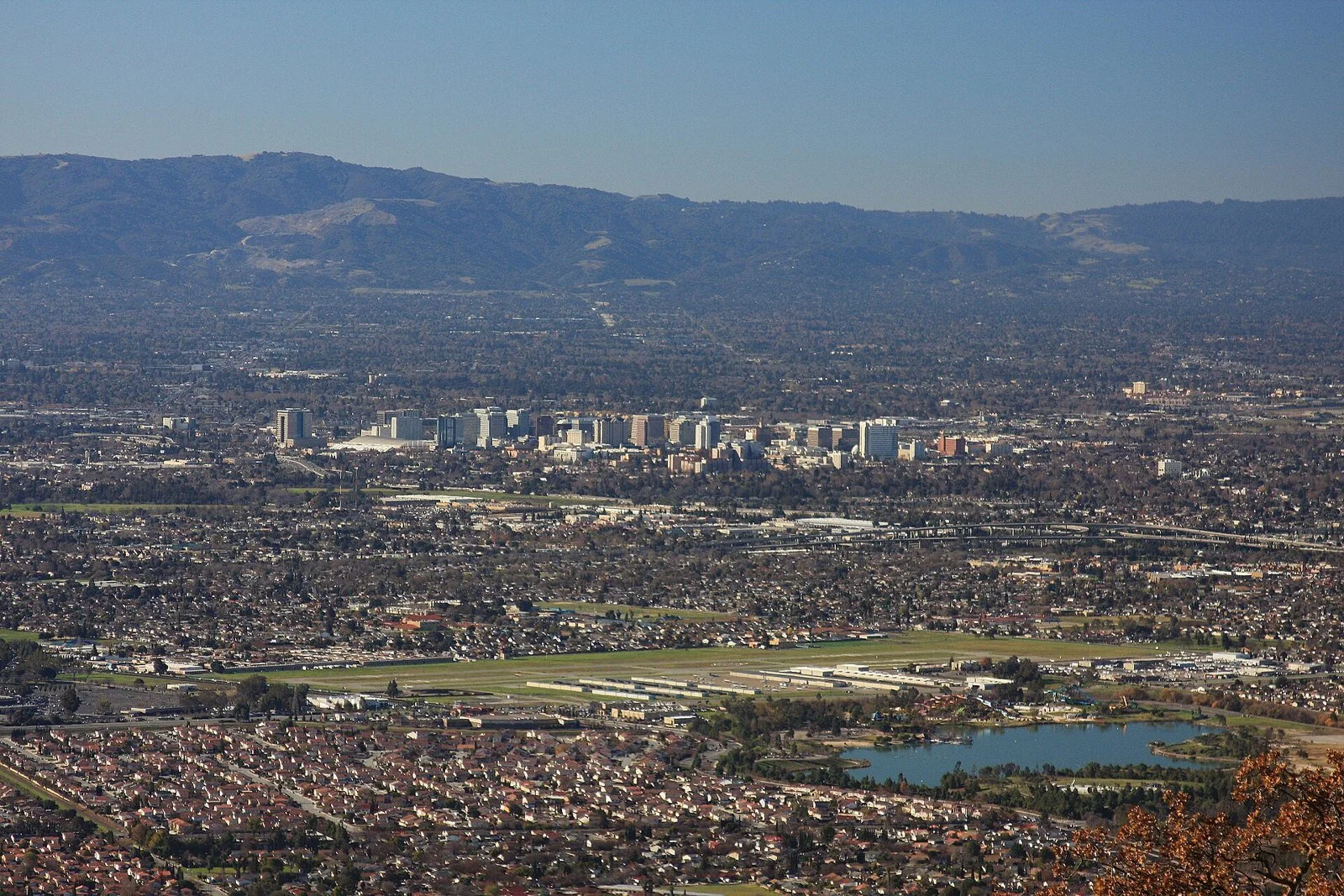
Downtown San José. Bay Area cities are among the densest users of the new urban-infill CEQA exemption. Photo: Michael / Wikimedia Commons, CC BY 2.0
What Sacramento did not finish
If the 2025 trailer bills narrowed the door, 2026 tried — and largely failed — to reinforce what sits behind it.
Senate Bill 1326, introduced by Sen. Aisha Wahab of Silicon Valley, would have amended Public Resources Code sections 21074 and 21084.3 to say more clearly that tribal cultural resources are a separate category from ordinary archaeological resources; to list sanctified cemeteries, cemeteries and burial areas of California Native American tribes among the places that can qualify; to require lead agencies, when feasible, to adopt mitigation identified in consultation; and to require substantial evidence when an agency rejects tribal methods or tribal-proposed mitigation. The Senate passed it 33-0 on May 22. The Assembly Natural Resources Committee sent it to Appropriations on June 22. On Aug. 13, the Assembly Appropriations Committee held it on the suspense file. Bills held there at the final hearing of the year do not advance. SB 1326 is dead for 2026.
Days later came a different kind of signal. On Sept. 25, Newsom signed Assembly Bill 2115, formalizing a state apology for harms and atrocities against California Native peoples. On Sept. 30, he vetoed two other tribal bills that had cleared the Legislature: AB 1881, Assemblymember James C. Ramos’s California Indian Freedom Act of 2026, which would have limited state interference with tribal religious practice on state land, and AB 2218 by Assemblymember Ash Kalra, which would have forced mediation when tribes and state water agencies deadlocked over ancestral waters. CalMatters, co-publishing with ICT, reported tribal leaders calling the timing a contradiction of the apology. Newsom’s veto messages cited uncertainty and far-reaching effects on state operations. The California Chamber of Commerce applauded both vetoes.
None of those bills rewrote AB 130 or SB 131. Together they sketch the political weather around burial places in fall 2026: streamlining already in force, strengthening bills that stall or die, and an apology that does not reopen a closed review.
What it means in the Bay Area
The San Francisco Bay Area is dense with exactly the conditions AB 130 rewards: incorporated cities, previously developed parcels, transit corridors and political pressure to build. It is also dense with the conditions that make compressed consultation hard: filled shorelines, razed shellmounds, poorly documented removals from the late nineteenth and twentieth centuries, and tribes — including the Muwekma Ohlone Tribe of the San Francisco Bay Area — that appear on the Native American Heritage Commission’s contact list for AB 52 purposes but lack federal recognition.
For projects that claim the urban-infill exemption, the statute still requires Sacred Lands Inventory requests, records searches, monitoring on request, and immediate stoppage if remains appear. Those are not optional slogans. They are conditions of approval. For projects that claim other new exemptions, or that never touch CEQA at all, the practical backstop is often discovery law itself: Health and Safety Code section 7050.5, Public Resources Code section 5097.98, and the Most Likely Descendant process run through the Native American Heritage Commission. That process starts after the backhoe hits something. It is not a planning tool.
Ohlone Families Consulting Service and other tribal monitors already work inside that gap. The 2025 exemptions make the gap larger for some project types and more formal, if shorter, for others. Cities that treat the AB 130 tribal package as a checklist to clear, rather than a chance to redesign a footprint before excavation, will learn the cost when remains appear mid-pour. Cities that notify early, share maps that actually help, and budget for monitors before grading will find the statute usable. The law allows both approaches. It rewards speed either way.
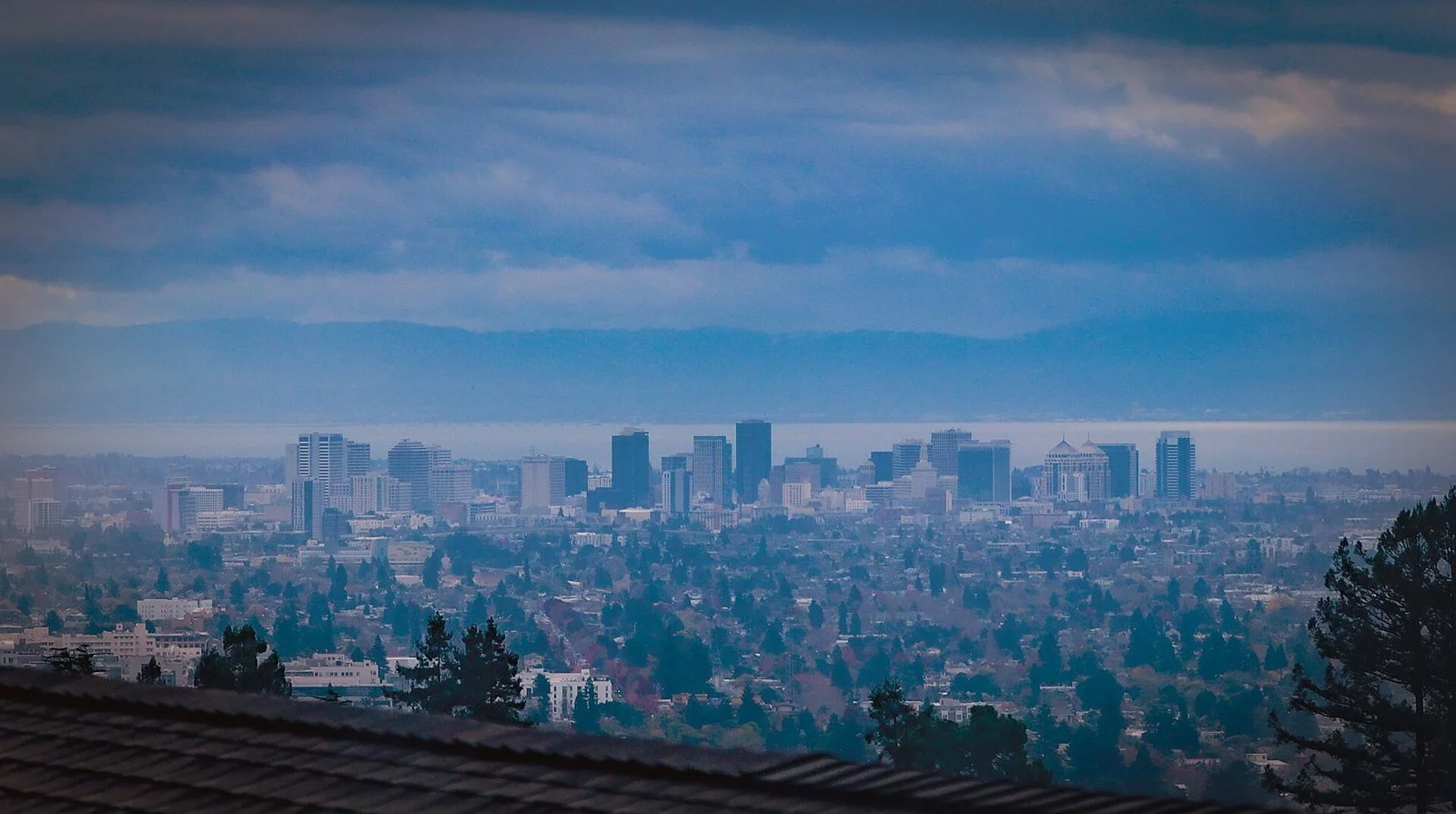
Oakland’s skyline from the hills in 2025. Infill housing, transit and shoreline projects all cross ancestral Ohlone land. Photo: Ligocsicnarf89 / Wikimedia Commons, CC BY 4.0
What to watch
Three things will tell whether the redesign holds.
First, litigation. The first wave of AB 130 notices of exemption is already in county clerk files. Challenges will test how courts read “deemed complete,” how much deference tribes get inside a 45-day consultation, and whether dropping CEQA also drops related claims.
Second, clean-up bills. SB 158 in October 2025 already amended pieces of the trailer package. More technical fixes are likely. Whether the Legislature ever attaches the section 21080.66 tribal conditions to SB 131’s other exemptions is an open political question, not a drafting accident.
Third, the federal parallel. As a companion piece in this newsletter describes, the Advisory Council on Historic Preservation is advancing a rewrite of the federal Section 106 regulations that tribes say would narrow protection for sacred places and burial landscapes on projects with a federal handle. California’s CEQA exemptions and Washington’s Section 106 rewrite are separate legal systems. On the ground, a Bay Area project can touch both — a federal loan, a Clean Water Act permit, a transit grant — or neither. When both doors narrow at once, burial places depend more than ever on what gets written into a grading permit before the first shovel.
Editor’s note: Ohlone Families Consulting Service is the cultural resources management service of the Muwekma Ohlone Tribe of the San Francisco Bay Area. This article describes enacted and proposed statutes; it is not legal advice. Quotations and characterizations of opposition letters, bill text and veto messages come from the California Legislative Information site, the Governor’s Office, the Association of Bay Area Governments’ June 18, 2026 summary, the June 27, 2025 coalition opposition letter, contemporaneous reporting by the California Condor Chapter and CalMatters/ICT, and Public Resources Code section 21080.66 as published; full sources are listed in the source notes.