The Process Before the Harm
Congress is arguing about permitting reform, and the House has already passed a major rewrite of the National Environmental Policy Act. Separately, and more quietly for most Californians, the Advisory Council on Historic Preservation has voted to overhaul the regulations that make Section 106 of the National Historic Preservation Act work. Tribal organizations say the draft would shrink protection for sacred places and burial landscapes before a federal project breaks ground. As of mid-October, that draft is still inside the White House, not yet published for public comment.
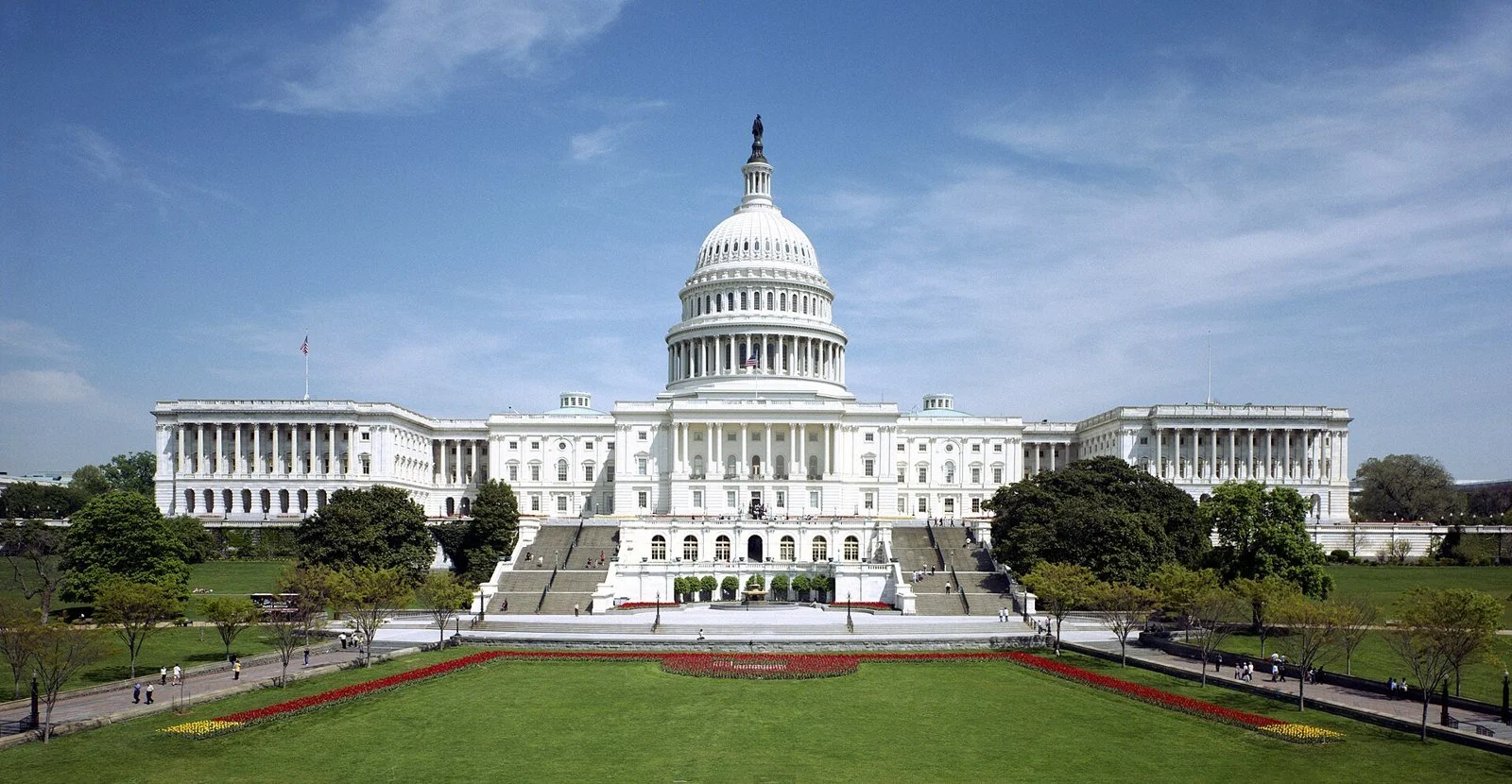
The west front of the United States Capitol. The House passed the SPEED Act in December 2025; Section 106’s bigger fight is regulatory. Photo: Architect of the Capitol / Wikimedia Commons, public domain
The second track is regulatory, and it is further along. On July 17, 2026, ACHP Vice Chairman Travis Voyles circulated draft revisions to 36 C.F.R. Part 800. On July 24, council members voted 16–5, with two abstentions, in an unassembled meeting, to advance a Notice of Proposed Rulemaking, according to the National Conference of State Historic Preservation Officers, a voting member of the council. The ACHP’s own announcement said the draft would move to interagency review at the Office of Information and Regulatory Affairs inside the Office of Management and Budget before publication in the Federal Register. OIRA logged the matter under RIN 3010-AA10. As of mid-October 2026, EO 12866 meetings on the file were still being scheduled. The proposal has not yet appeared as a published proposed rule.
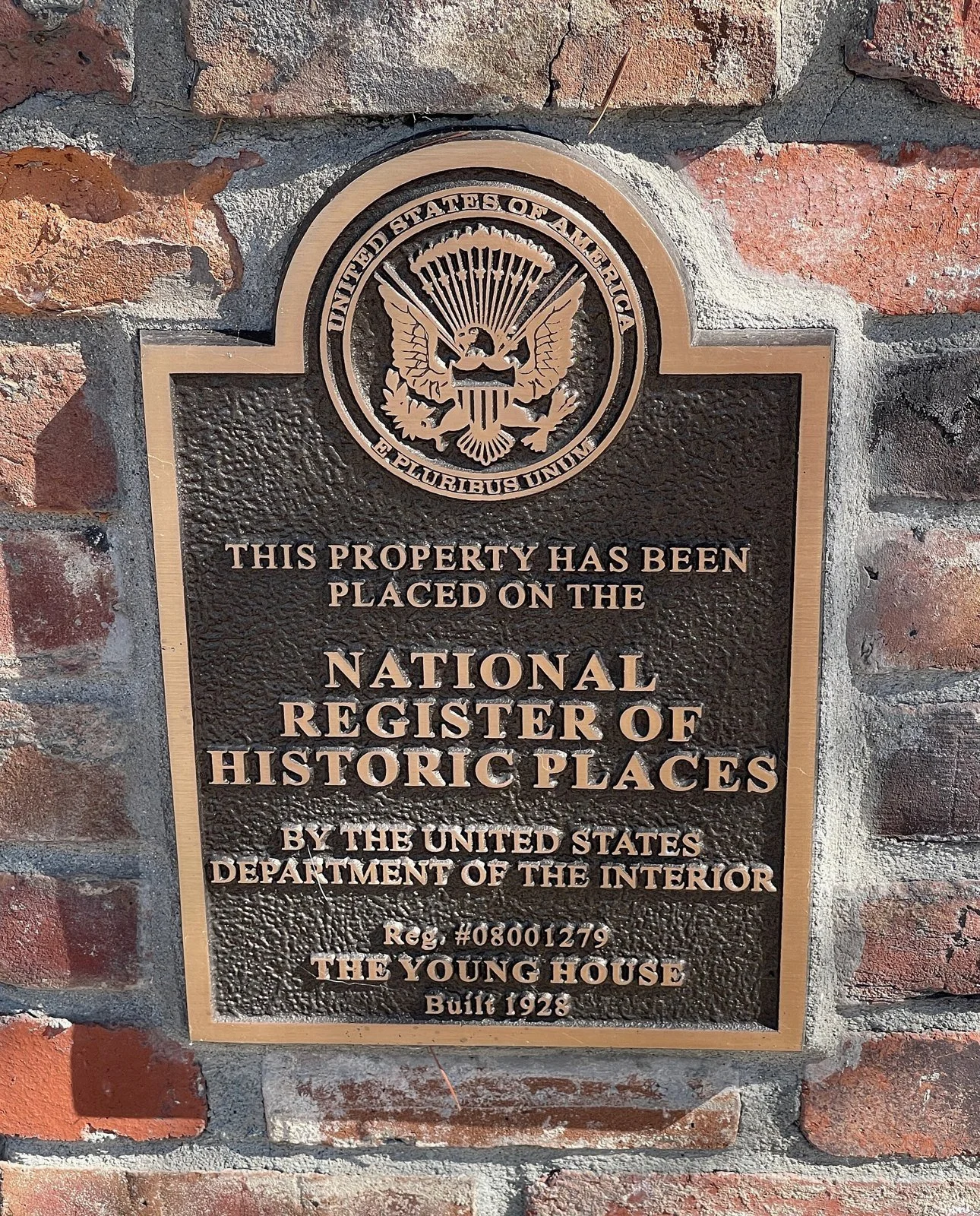
A National Register of Historic Places plaque. Section 106 covers listed properties and those eligible for listing. Photo: Gregory Ford Henderson / Wikimedia Commons, CC BY-SA 4.0
What the draft would change
The ACHP has treated the circulating text as pre-decisional and has not posted a public draft of the full rewrite. Descriptions below come from analyses published by the National Association of Tribal Historic Preservation Officers, which sits on the Council and voted no; from a July 28 Holland & Knight alert summarizing the draft for clients; from the National Trust for Historic Preservation’s public summary of the most disturbing changes; and from an Aug. 18 joint statement by the National Congress of American Indians, the Association on American Indian Affairs, NATHPO and the United South and Eastern Tribes Sovereignty Protection Fund.
Across those accounts, several changes recur.
The multistep consultation would be collapsed into an agency-prepared “Section 106 Report” that packages identification, effects analysis and proposed mitigation into one document the agency certifies before circulating it for comment. Agencies would gain authority to shorten or lengthen any regulatory deadline by letter. The long-standing directive to seek ways to “avoid, minimize or mitigate” adverse effects would give way to language about identifying measures to “address” effects, and to allowing an agency to decide that other considerations outweigh historic preservation. Adverse effects resolved today by negotiated memoranda of agreement could instead be closed by an agency “memorandum of decision.”
Definitions would narrow. The area of potential effects would focus on “direct material” alterations, dropping the existing reference to indirect effects. Historic property would be tied more tightly to a physical location and National Register criteria; NATHPO warns that the draft would treat “noncompact, unimproved natural features such as mountains, valleys, bodies of water, or landscapes, including ethnographic landscapes,” as outside the definition of property for Section 106 purposes. Public participation, now described in the regulations as essential to informed federal decision-making, would become a matter of agency discretion. On tribal lands, post-review discovery rules that today require tribal concurrence would, in the Holland & Knight reading, be softened to consultation.
NATHPO’s executive director for Indigenous diplomacy and federal relations, Ira L. Matt (Séliš), put the organization’s view without softening: “The ACHP’s proposed regulations are an affront to Tribal sovereignty. Any effort to diminish our voice or disregard the places, traditions, and practices we hold sacred is egregious and represents a violation of the federal government’s trust and treaty responsibilities that is neither morally nor ethically defensible.”
The Aug. 18 joint statement by NCAI, the Association, NATHPO and USET Sovereignty Protection Fund said the draft “violate[s] the United States’ trust and treaty obligations, exceed[s] the boundaries of administrative authority, and attempt[s] to alter responsibilities established by federal statute.” The organizations argued that the proposal would expand agency discretion over when consultation happens, shrink the set of impacts treated as effects that trigger mitigation talks, hand more inherently federal functions to applicants, shorten critical stages and try to limit judicial review. They also objected to the process: council members, they said, received roughly a week to review a nearly complete rewrite, without government-to-government consultation with Tribal Nations, after the Council had earlier contemplated a more deliberative schedule.
The Golden Gate Bridge from the Marin Headlands. Federal permits and dollars run through countless Bay Area corridors. Photo: Vreendoch / Wikimedia Commons, CC BY-SA 4.0
Why burial places are in the crosshairs
Section 106 does not create a federal cemetery law. NAGPRA and California’s discovery statutes do different work when remains are already in hand. What Section 106 does is force federal decision-makers to look before a project design hardens — to ask whether a traditional cultural property, a cultural landscape, a village site or a burial area that may be eligible for the National Register could be affected, and to consult with the tribes that know those places.
If landscapes and unimproved natural features drop out of “historic property,” places whose significance is ceremonial, ethnographic or relational rather than architectural become harder to bring into the review. If indirect effects drop out, changes to setting, sound, access, viewshed and vegetation — the conditions that make a burial landscape usable as a living place — become easier to ignore. If consultation shrinks to commenting on an agency-certified report, tribal knowledge arrives after the analysis is framed. If an agency can close adverse effects with its own memorandum of decision, a tribe that withholds agreement no longer holds the same procedural leverage.
None of that requires a backhoe to hit a coffin for the harm to begin. The joint statement’s blunt point was that once a sacred place is destroyed or ancestral remains are disturbed, consultation afterward cannot restore what was lost. The process exists to come before the harm.
Supporters of faster permitting argue that Section 106, as practiced, has become an unpredictable delay machine, that eligible-but-not-listed properties over 50 years old pull almost any corridor into review, and that agencies need clearer off-ramps and deadlines. The National Trust and tribal organizations answer that many delays blamed on Section 106 are late consultation, thin identification and understaffed offices — problems that get worse, not better, when agencies can certify their own report and move on. Both arguments will fill the eventual Federal Register docket. Neither changes what the circulating draft appears to do on paper.
California’s federal handle
California projects meet Section 106 whenever there is a federal undertaking: Caltrans work with federal highway dollars, U.S. Army Corps of Engineers permits for fill in waters of the United States, Federal Transit Administration grants, broadband funded through federal programs, Bureau of Land Management and Forest Service decisions, Veterans Affairs and Housing and Urban Development financing, and countless smaller licenses. The Bay Area’s shoreline, freeways and downtown cores are thick with those handles.
A rewrite that narrows landscapes and indirect effects would land hard here. Ohlone ancestral territory is not a single fenced parcel. It is bayshore, creek corridors, ridgelines, shellmound districts and village sites that were graded, filled and paved across a century and a half. Many of the places that still matter cannot be reduced to a building footprint. They are exactly the kind of “noncompact” cultural geography NATHPO says the draft would push outside the property definition.
There is a second California complication the federal regulations have never fully solved. Section 106’s tribal consultation framework is built around federally recognized Indian Tribes and Native Hawaiian Organizations. California’s Native American Heritage Commission contact list, which drives state AB 52 consultation, includes tribes without federal recognition. The Muwekma Ohlone Tribe of the San Francisco Bay Area is one of them. On a pure state CEQA project, that list is the door. On a pure federal undertaking, federal recognition is usually the door. Projects that carry both a state approval and a federal permit can open both — or, if California’s new CEQA exemptions remove the state review while a narrowed Section 106 weakens the federal one, neither. A companion article in this newsletter walks through those state exemptions in detail.
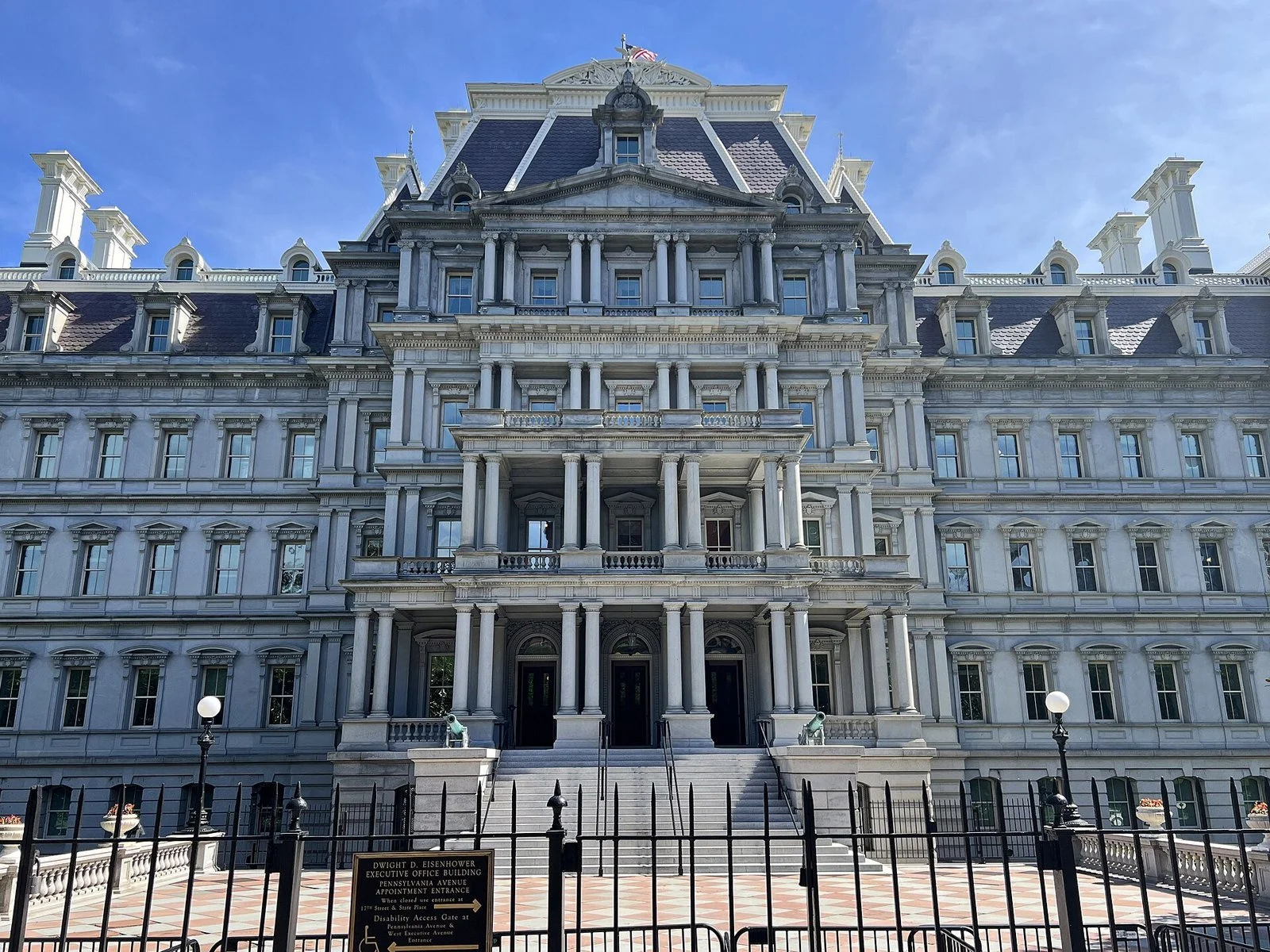
The Eisenhower Executive Office Building, home to OIRA. The Section 106 draft was still in White House review in October 2026. Photo: 颐园居 / Wikimedia Commons, CC BY 4.0
What happens next
The NPRM is not final. After OIRA finishes, the ACHP would publish a proposed rule for public comment — Holland & Knight has said a 30-day comment window is expected, which tribal advocates already call too short for changes of this scale. Final rulemaking would follow responses to comments, and would face likely litigation over whether the Council has authority to narrow duties Congress wrote into the NHPA.
NCAI, the Association, NATHPO and USET say they will mobilize Tribal Nations once the comment period opens, and that government-to-government consultation is not the same thing as a Federal Register inbox. NATHPO has urged tribes to brief leadership now, document places and practices at risk, and collect examples where early consultation avoided harm or where late consultation caused it.
Congress could still act on NHPA directly. As of this writing it has not. The SPEED Act, if it becomes law in its House-passed form, would change NEPA practice that often runs beside Section 106, including how agencies integrate the two reviews. It would not, by its current text, rewrite Part 800.
For agencies, applicants and tribal monitors working in California today, the operational advice is unromantic. Assume the current Part 800 still governs until a final rule says otherwise. Initiate Section 106 early on federal undertakings. Do not treat a state CEQA exemption as a substitute for federal consultation when a federal handle exists. And watch RIN 3010-AA10: when the proposal lands in the Federal Register, the comment letters filed in the first month will shape whether burial landscapes remain inside the process that is supposed to come before the harm.
Editor’s note: Ohlone Families Consulting Service is the cultural resources management service of the Muwekma Ohlone Tribe of the San Francisco Bay Area. This article describes pending federal legislation and a proposed regulation that has not been published in the Federal Register; it is not legal advice. Descriptions of the draft Part 800 revisions rely on public analyses by NATHPO, Holland & Knight, the National Trust for Historic Preservation and the Aug. 18, 2026 joint statement by NCAI, the Association on American Indian Affairs, NATHPO and USET Sovereignty Protection Fund, because the ACHP has not released a public draft of the full text. Bill status for H.R. 4776 is from Congress.gov. Full sources are listed in the source notes.
Correction, Oct. 23, 2026: An earlier version of this article gave the ACHP vote as 15–5. NCSHPO, a voting member, reported it as 16–5 with 2 abstentions.