The Rewrite Moves to the Statute Books
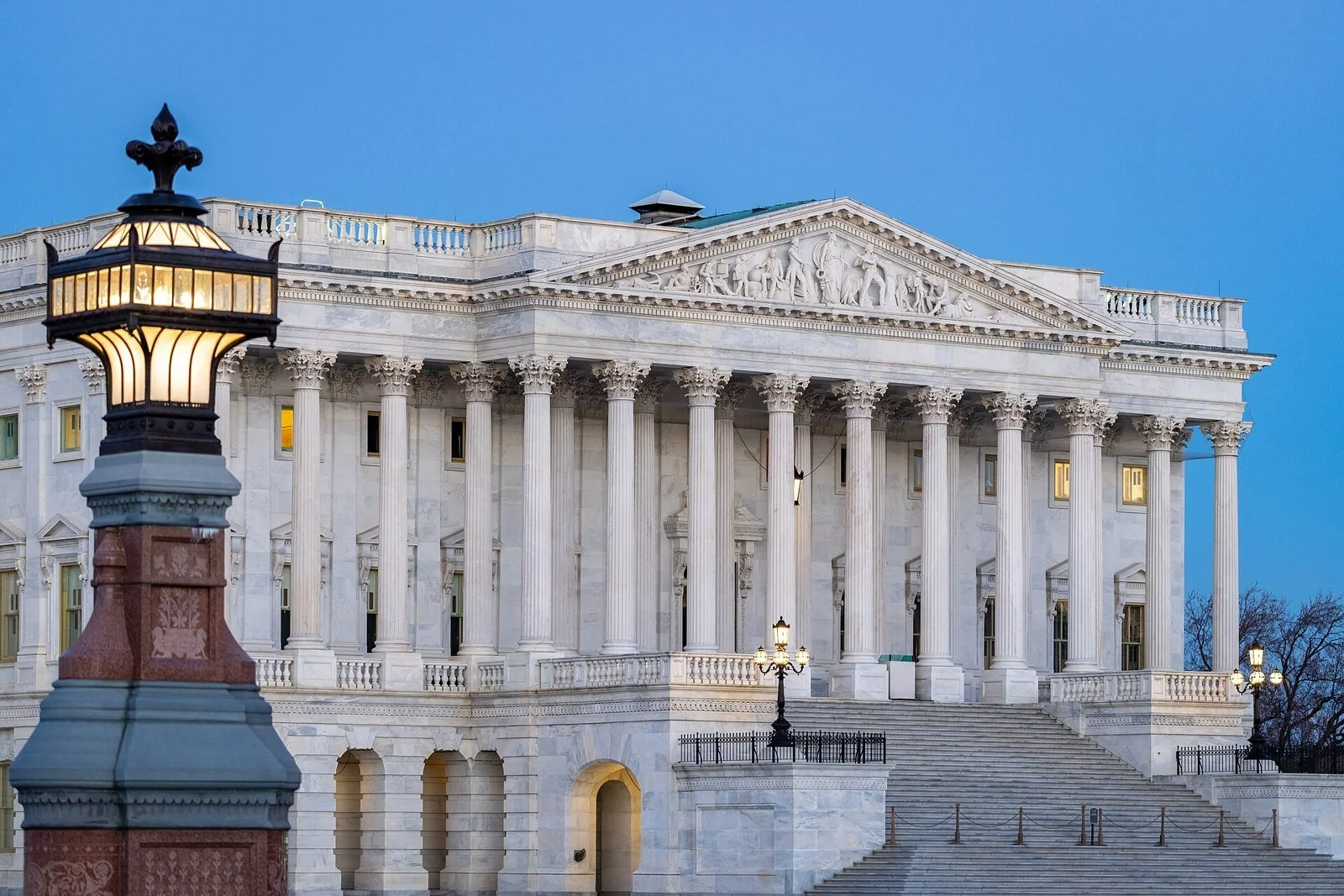
The Senate wing of the U.S. Capitol. A procedural vote to take up S. 5653 is scheduled for Nov. 9. Photo: Architect of the Capitol / Wikimedia Commons, public domain.
A bipartisan Senate permitting bill would write a narrower, faster Section 106 directly into the National Historic Preservation Act, with fewer projects reviewed, a fixed clock for tribes and weaker remedies in court. Its supporters call it a durable shield against a pending federal rule rewrite. Tribal organizations call it something else. The Senate’s first vote is set for Nov. 9.
When Senator Mike Lee of Utah made the case for the sweeping bipartisan permitting bill, he reached for a Bay Area landmark. “We once built projects like the Hoover Dam, the Golden Gate Bridge, and the Empire State Building in years, not decades,” he said in a Sept. 30 statement announcing the bill. “America still has the resources and the talent, but what too often stands in the way is a permitting system that takes too long and costs too much.”
The bill is S. 5653, the Bipartisan American Affordability and Jobs Act of 2026, which its backers and critics alike shorten to BAAJA. Most of its 417 pages deal with the National Environmental Policy Act, the Clean Water Act and electric transmission. One title, though, rewrites the federal law that gives tribes their main say over what happens to ancestral places before construction starts.
Our Oct. 19 article on Section 106 said Congress had not moved to amend the National Historic Preservation Act itself. That was wrong. S. 5653 was already pending when we wrote it, and it does exactly that.
A bill, not a rule
Senator Shelley Moore Capito of West Virginia, who chairs the Environment and Public Works Committee, introduced S. 5653. Her cosponsors are Lee, who chairs Energy and Natural Resources, and the two committees’ ranking Democrats, Sheldon Whitehouse of Rhode Island and Martin Heinrich of New Mexico. Congress.gov lists the bill as referred to Energy and Natural Resources, with no further recorded action. Cloture has been filed on the motion to proceed. NATHPO and Roll Call report that the procedural vote is scheduled for Nov. 9, after the election; it will need 60 votes. Roll Call also reports that Rep. Jared Huffman, a Marin Democrat and the top Democrat on House Natural Resources, has urged Democrats to revisit permitting in the next Congress.
The historic preservation changes sit in Division B, Title III. Section 2301 amends Section 106, codified at 54 U.S.C. 306108. Section 2302 deals with funding.
What the text would change
Which projects count. Today an “undertaking” includes projects a federal agency carries out, permits or funds. Under the bill, a project would have to need a federal permit, license or approval and also be subject to “substantial Federal control and responsibility.” It expressly excludes projects where “the only Federal involvement is a loan, loan guarantee, grant (including a capitalization grant), cost-share award, or other form of financial assistance” unrelated to historic preservation. The Institute for Progress, a Washington think tank whose brief defends the bill’s tribal provisions, acknowledges that it “excludes projects that are federally funded but require no permit from Section 106 review.” Routine repair, maintenance and safety work are excluded as well.
Which harms count. An adverse effect would have to be reasonably foreseeable and “directly” alter a property’s integrity. Visual, atmospheric and audible effects would be excluded unless they significantly diminish what makes the place eligible. So would temporary alterations and effects on parts of a property other than its “character-defining features, such as contributing elements, cultural-use locations, or access points.” The area of potential effects would exclude any area touched only by parts of a project outside federal control.
Who decides. When the agency draws that area and identifies historic properties, it “may consult” with State and Tribal Historic Preservation Officers, tribes, local governments and applicants. It must seek and incorporate their information, but only information delivered within 30 days of a request. The agency may also conclude, “in the sole discretion” of the federal official, that other considerations outweigh historic preservation.
The clock. Consultation would begin no later than environmental review and end when the NEPA document is complete. If a tribe or preservation officer does not respond within 30 days, the agency may proceed without it, and if it re-enters later, the agency need not reconsider. When no agreement is reached, the bill allows another 60 days of consultation and a 45-day comment window for the Advisory Council on Historic Preservation, followed by a final agency decision that satisfies the agency’s obligations. A property identified or nominated after a review begins would not require the agency to reopen it.
The courts. Judges would give agencies “substantial deference.” If an agency broke the law, “the only remedy the court may order is to remand, without vacatur or issuance of an injunction.” The approval would stay in place while the agency fixed its errors. Challenges would have to be filed within 150 days.
The money. The bill authorizes $200 million a year for the Historic Preservation Fund from fiscal 2027 through 2036. It also creates a competitive grant program for tribal historic preservation officers to build confidential databases of significant places, at $20 million a year from fiscal 2027 through 2030. It adds two-year performance reviews for state and tribal preservation programs. A program that doesn’t meet its timelines can lose grants, and eventually the Secretary of the Interior can take over its functions.
Transmission towers on the Coyote Hills skyline in Fremont. Much of S. 5653 concerns the electric grid; one title rewrites Section 106. Photo: King of Hearts / Wikimedia Commons, CC BY-SA 4.0.
What it could mean around the Bay
On the Bay’s shoreline and creeks, the ancestral Ohlone landscape lies under freeways, rail lines, levees and suburbs. Much of the protection those places receive comes from federal reviews: Army Corps permits for shoreline and wetland work, federal highway approvals that run through Caltrans, and federal transit dollars.
The bill would affect each differently. Projects that need a Corps permit would still be undertakings. But the review would focus on direct effects, and the area studied would leave out ground touched only by parts of the project outside federal control. A project whose only federal tie is a grant could fall outside Section 106 entirely. Whether a given transit or road project still triggers review would depend on what other federal approvals it needs and how agencies read “substantial Federal control.” The Association of Metropolitan Planning Organizations cautions that the practical effect “will depend heavily on agency implementation.”
Tribal monitoring often comes out of the agreements Section 106 produces. Fewer reviews, effect findings made by the agency alone and a 30-day response window would mean fewer chances to negotiate it. The bill’s consultation lists name state and tribal preservation officers, Indian tribes, Native Hawaiian organizations, local governments and applicants. The NHPA defines a tribe as one with federal recognition, which the Muwekma Ohlone Tribe does not have. Under the current regulations, agencies can invite groups without federal recognition to take part as additional consulting parties. The bill’s lists do not include them.
The bill would leave California’s own law in place, including the state statutes that govern the discovery of Native American human remains. Those protections take effect only once a find is made. Federal review is supposed to come earlier.
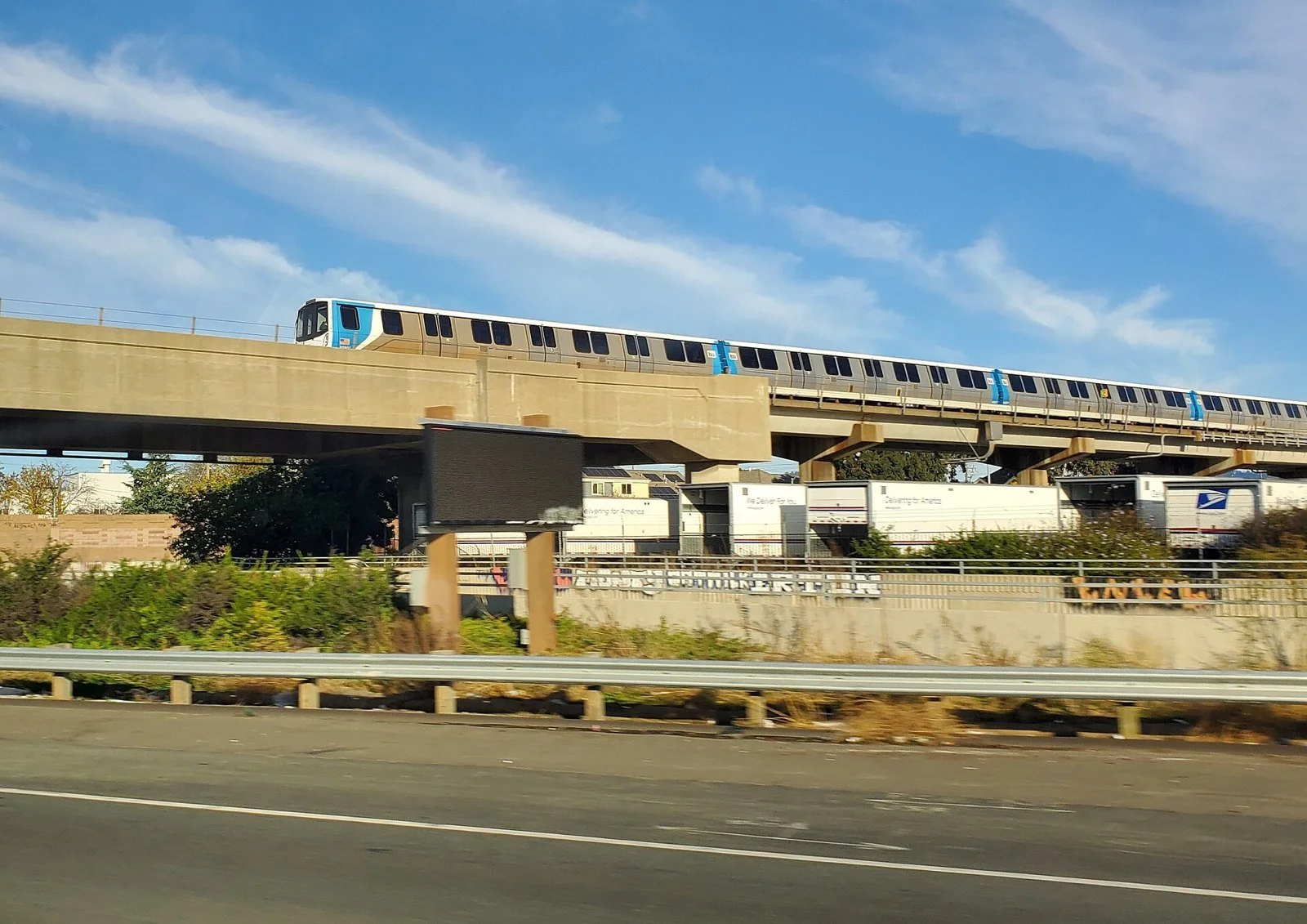
A BART train crosses Interstate 880 in West Oakland. Under S. 5653, projects whose only federal tie is a grant would fall outside Section 106. Photo: Pi.1415926535 / Wikimedia Commons, CC BY-SA 4.0.
The case for and against
Supporters frame the bill as a compromise. “Like all major pieces of bipartisan legislation, this bill is a compromise,” Whitehouse said. Heinrich said it would “help us get to ‘yes’ or ‘no’ on energy projects faster, while protecting important environmental safeguards and protecting the ability of Tribes to formally consult during these processes.”
The Institute for Progress makes the sharpest pro-tribal case. It argues that the ACHP’s pending rule rewrite would be worse. In IFP’s account, that draft says “mountains, valleys, bodies of water, or landscapes, including ethnographic landscapes, do not qualify” as historic properties. The bill, by contrast, defines a place of traditional religious or cultural importance as an “identifiable geographic location or feature.” IFP concludes that the bill “codifies Tribal protections and would stop the current administration from ending those protections.”
Tribal organizations reject that bargain. In an Oct. 9 letter, nine national and regional tribal organizations, including the National Congress of American Indians and the Native American Rights Fund, acknowledged “some positive provisions, including the codification of Tribal consultation and an increase in the Historic Preservation Fund.” But they wrote that “the federal government is proposing to facilitate the demolition of our heritage.” They said remand without vacatur “nearly eliminates any real remedies available to Tribal Nations,” and they urged Congress “to withdraw this language and work in collaboration with Indian Country on a more honorable alternative.”
“Our heritage is not a bargaining chip.” — Ira Matt (Séliš), NATHPO
“Our heritage is not a bargaining chip, and the sovereignty and sacred places of Tribal Nations are not leverage for Senators’ backroom negotiations,” said Ira Matt (Séliš) of the National Association of Tribal Historic Preservation Officers on Oct. 16. NATHPO notes that the $200 million is only authorized, not appropriated, and that a statute is harder to challenge or reverse than a regulation. The National Trust for Historic Preservation says the bill would “negate the core protections and purpose” of the 1966 law “by empowering federal agencies to make unilateral decisions without consulting state or local governments, Tribes, or the American public.”
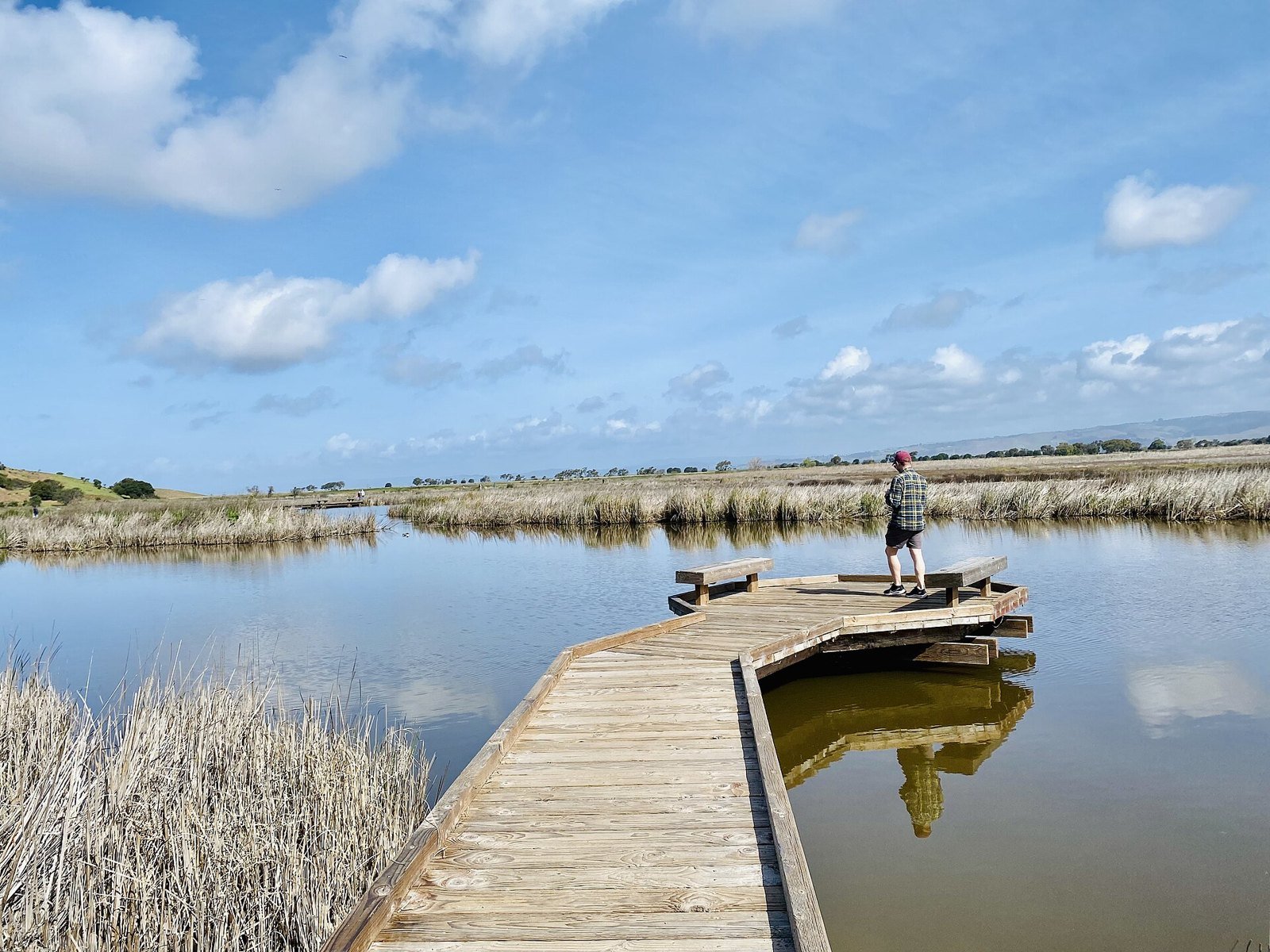
A boardwalk over a slough at Coyote Hills Regional Park, on the ancestral Ohlone shoreline of the East Bay. Photo: Suiren2022 / Wikimedia Commons, CC BY-SA 4.0.
Meanwhile, the rule
The regulatory track that we covered on Oct. 19 has not moved into public view. On Oct. 23, Reginfo.gov listed the ACHP’s Part 800 rewrite, RIN 3010-AA10, as “Pending Review” at the Office of Information and Regulatory Affairs, received July 28. The site showed 47 meeting records under Executive Order 12866 for the file, including sessions on Oct. 20 and others scheduled through Oct. 29. The rule has not appeared in the Federal Register, and the current Part 800 regulations remain in force.
Two federal tracks now run toward the same place. One is a proposed rule that, once published, would face a public comment period and possible legal challenges. The other is a statute that would carry the force of law the day it was signed. The first test comes Nov. 9, and the four sponsors have said they expect to offer a manager’s amendment. Whether the NHPA language survives it will decide whether the narrower process becomes permanent.
Editor’s note: Ohlone Families Consulting Service is the cultural resources management service of the Muwekma Ohlone Tribe of the San Francisco Bay Area. This article describes pending federal legislation and a proposed regulation that has not been published; it is not legal advice. Bill provisions are quoted from the S. 5653 text as introduced (GovInfo). Floor timing is from NATHPO’s Oct. 16 briefing and Roll Call’s reporting; OIRA status is from Reginfo.gov, checked Oct. 23, 2026. Correction: our Oct. 19 article, “The Process Before the Harm,” said no bill amending the National Historic Preservation Act’s text had been identified. S. 5653, introduced Sept. 30, 2026, does amend it. Full sources are listed in the source notes